Recommended
Wine Estate· Central Portugal
Quinta dos Roques
A benchmark Dão estate at Mangualde, one of the first to bottle single-varietal Dão wines (Touriga Nacional, Jaen) in the 1990s, with a modernist winery in the heart of the region.

Coimbra's university, the Serra da Estrela, medieval villages and the surf coast.
Central Portugal is the country's quiet middle — the university city of Coimbra, the granite heights of the Serra da Estrela, a string of medieval schist villages, and a long, under-appreciated surf coast. It's the connective tissue between north and south, and the region most travellers drive straight through.
Stay longer and it repays you: the schist villages of Lousã, the Dão and Bairrada wine regions, the Bussaco forest, and the Atlantic breaks at Peniche and Nazaré. It's less glamorous than the Algarve and less famous than the Douro, and that's exactly its appeal.
Central Portugal keeps two of the country's most distinctive wine regions — the elegant Encruzado whites of Dão and the tannic Baga reds of Bairrada — plus the granite-cave sparkling of Távora-Varosa. Eat roast suckling pig in Mealhada, mountain cheese in the Estrela, and convent pastries in every town.
A benchmark Dão estate at Mangualde, one of the first to bottle single-varietal Dão wines (Touriga Nacional, Jaen) in the 1990s, with a modernist winery in the heart of the region.

A historic Dão estate (records date to the 12th century) relaunched by winemaker Rui Madeira, focused on old-vine Encruzado whites and elegant reds; a more intimate alternative to the larger quintas.

Winemaker Carlos Lucas's Dão estate at Carregal do Sal, producing elegant, food-friendly Dão reds and a celebrated Encruzado white; a working, family-run quinta with a good visitor programme.

The Baga standard-bearer — Luís Pato (and now daughter Filipa) championed the difficult Baga grape when others abandoned it, making structured, ageworthy reds from old vines near Mealhada. The estate redefined Bairrada.

A respected Bairrada producer in Cantanhede, known for balanced Baga reds and sparkling wines, with a welcoming tasting room on a working estate.

A small biodynamic Bairrada project by Luís Pato's daughter Filipa and her husband, making precise, low-intervention Baga reds and white Beiras wines from old-vine plots — one of the most talked-about 'new Bairrada' estates.

A Távora-Varosa sparkling-wine estate (one of the Raposeira group's flagship quintas) producing méthode-traditionnelle espumante from Malvasia Fina and Bical, set in a green valley near Lamego.

The flagship Távora-Varosa sparkling house, ageing its méthode-traditionelle wines in hand-carved granite caves cut into the valley side — Portugal's most prestigious espumante, in a dramatic setting.

The wine region of the Ribatejo along the Tagus floodplain — historically a workhorse region now making serious, value-driven reds and crisp whites, with old-quinta estates at Almeirim and Alpiarça. Less glamorous than Alentejo, more accessible.

Portugal's oldest demarcated wine region (1908), a cool granite plateau wrapped by mountains that keeps Dão reds elegant and its whites bright. Touriga Nacional, Alfrocheiro and Jaen define the reds; Encruzado is the white that put the region back on the map.

A small Atlantic-influenced region between Aveiro and Coimbra, the spiritual home of Baga — a tannic, high-acid red grape that, in good years, makes some of Portugal's longest-lived wines. Sparkling wines (espumante) made by the méthode classique are a Bairrada specialty.

Portugal's highest, coldest wine region, climbing the eastern slopes of the Serra da Estrela toward the Spanish border. Frost and altitude make for nervy whites and peppery reds from autochthonous grapes few outsiders have heard of — Fonte Cal, Síria, Borba das Moscas.

Portugal's sparkling-wine heartland, a cool granite valley where the Távora and Varosa rivers meet, planted to Malvasia Fina, Bical and Cercial. Murganheira and Raposeira age their espumante in hand-carved granite cellars.

The Mercado Municipal de Coimbra is the city's culinary heartbeat, offering a vivid, authentic look at the produce and traditions of Central Portugal. It is an essential stop for those seeking to understand the region's agricultural bounty beyond the tourist trail.

Zé Manel dos Ossos is a legendary, pint-sized tasca in Coimbra famous for its authentic atmosphere and unpretentious, soul-warming home cooking. It is a mandatory pilgrimage for travelers seeking a genuine slice of Portuguese culinary history.

Roast suckling pig from the Bairrada — crisp-skinned, melting, the dish that defines the Mealhada roadside.
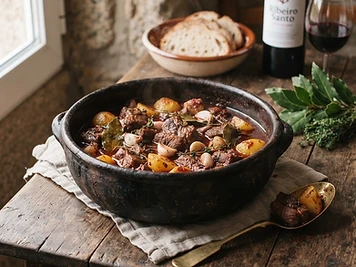
Goat baked in red wine and garlic — a stone-pot, slow-cooked relic of central Portugal.

Portugal's great mountain cheese — a soft, spreadable sheep's milk cheese with protected origin.

A fragile convent pastry of egg-yolk cream in tissue-thin pastry — the great sweet of central Portugal's convents.
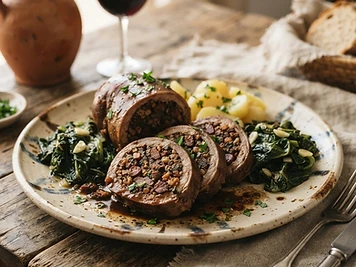
Stuffed pork stomach slow-braised in the Dão — a hearty, old-table dish of central Portugal.
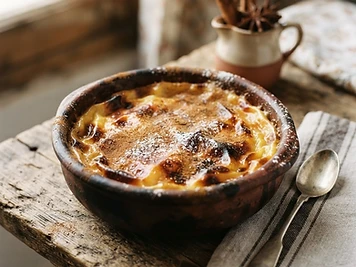
A rustic baked egg-and-cinnamon custard cooked in clay — a humble convent dessert of the Beiras.

Egg yolks spun into golden threads of sugar — the most hypnotic of the convent sweets.

A small town built around one of Portugal's greatest monuments — the Batalha Monastery.


A flat canal city on a lagoon — art-nouveau façades, moliceiro boats, and a beach (Costa Nova) a short ride away.

A perfectly walled medieval town — whitewashed houses, yellow and blue trim, and a castle you can stay in.

A fishing town turned big-wave legend — the Sitio clifftop, giant surf at Praia do Norte, and a working beach below.

A Templar city on the Nabão — the Convent of Christ is one of Portugal's most extraordinary monuments.

A granite village pinned between giant boulders — voted 'most Portuguese village' in 1938.

A schist-village amphitheater of blue-grey stone houses in a remote Serra do Açor valley.

Fado de Coimbra is a unique, melancholic musical tradition performed by male students and alumni of the University of Coimbra, often singing of lost love, student life, and social protest. It's an essential part of the city's identity and offers a profound glimpse into Portuguese soul.
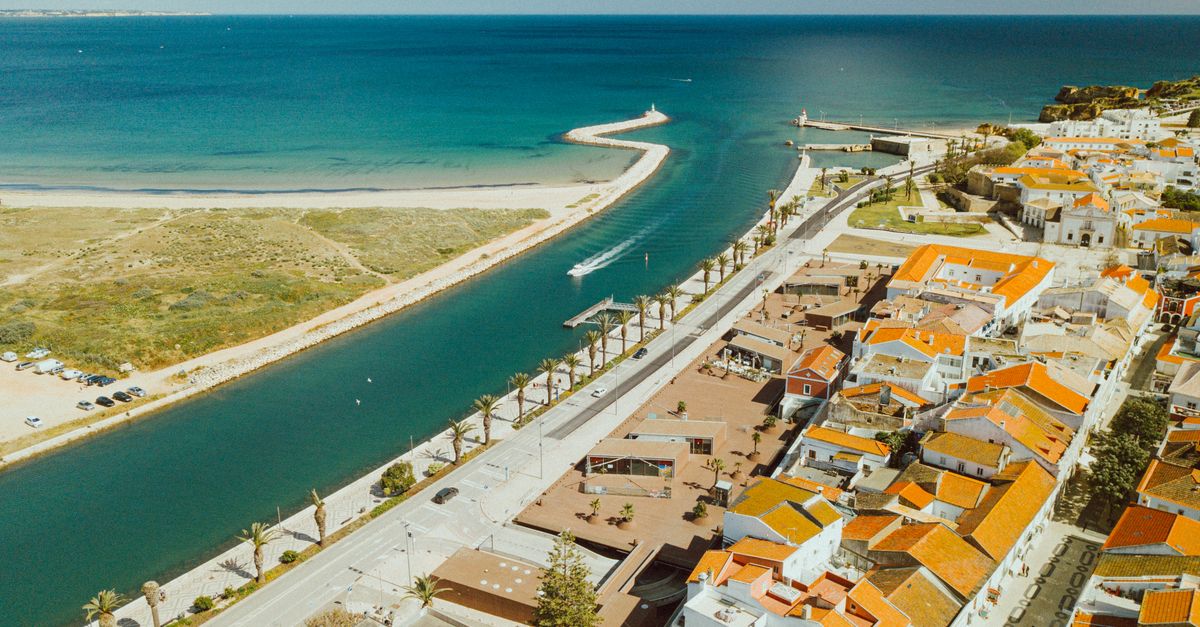
Entrudo de Lazarim is a deeply archaic and raw Carnival celebration defined by devilish wooden masks and satirical poetry. It remains one of the most authentic and visceral folk traditions in Portugal, centered on the unique craft of local mask-makers.
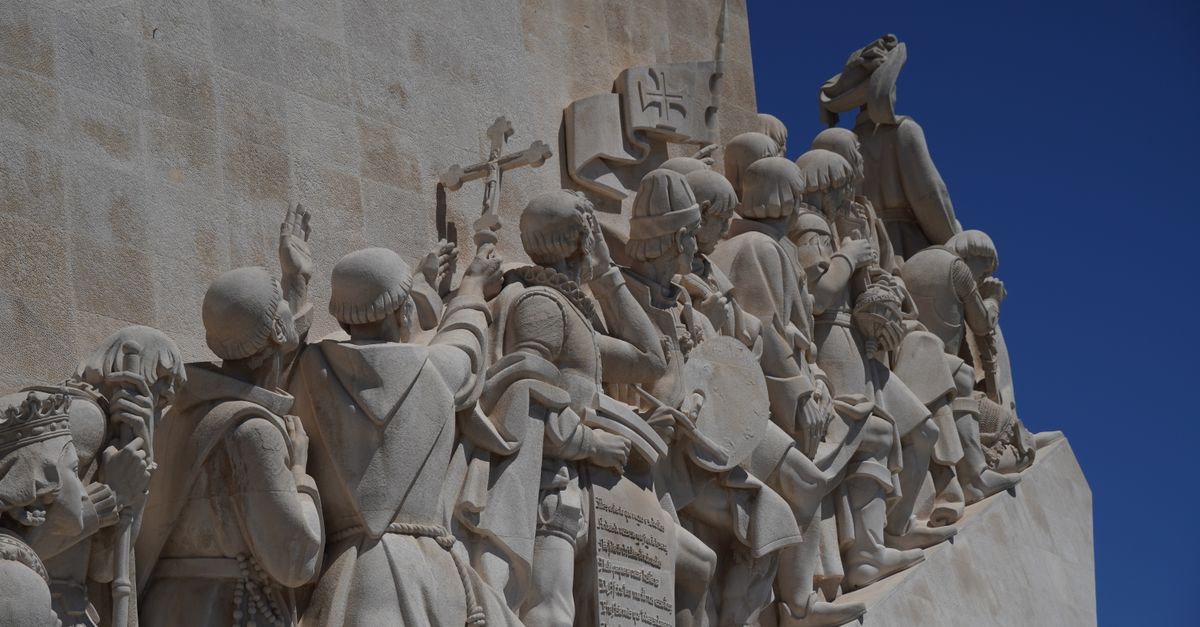
The Festa dos Tabuleiros is a spectacular, rare quadrennial celebration in Tomar dedicated to the Holy Spirit, characterized by a massive procession of women balancing towering, flower-laden headdresses. It is one of Portugal's most visually arresting and ancient folk traditions.

The Peregrinação a Fátima is one of the world's most significant Catholic pilgrimages, drawing hundreds of thousands to the Sanctuary of Fátima to mark the reported 1917 apparitions of the Virgin Mary. It is a profound, solemn, and visually striking demonstration of faith that anchors the cultural identity of Central Portugal.

Carnaval de Torres Vedras is widely considered Portugal's most authentic and spontaneous Carnival celebration, ditching high-gloss sambadromes for a satirical, raucous street party. It is defined by its egalitarian spirit, where the 'Matrafonas'—men dressed in outlandish female attire—rule the streets.

Cascata da Fraga da Pena is a stunning, multi-tiered waterfall tucked into the lush schist slopes of the Serra do Açor. It is a defining natural landmark of the Mata da Margaraça protected area, known for its deep green canopy and dramatic rock formations.

Grutas de Mira de Aire are the largest visited cave system in Portugal, showcasing an extraordinary labyrinth of stalactites and stalagmites hidden within the Serra de Aire. This subterranean wonder offers a rare glimpse into deep limestone geology accessible via a professionally managed tour route.

Estrada da Torre is a dramatic, high-altitude mountain road that winds through the heart of the Serra da Estrela, Portugal's highest mainland range. It serves as the primary artery for reaching the summit of Torre, offering unparalleled vistas of glacial valleys and granite monoliths.

Praia do Norte is home to the world's largest surfable waves, created by the unique underwater Nazaré Canyon. It is a legendary spectacle of raw power that defines the peak of big-wave surfing.

Supertubos is a world-renowned beach break in Peniche, famous for its powerful, hollow tubes that attract the world's best surfers. It serves as a flagship destination on the professional championship tour, defined by its massive, fast-moving barrels.

Serra da Estrela is Portugal's largest protected area, encompassing the nation's highest mountain range and a dramatic landscape of granite peaks, glacial valleys, and rare alpine habitats. It is the definitive destination for those seeking rugged high-altitude scenery, winter snow sports, and authentic mountain village culture.

Sitting at 1,993 meters, the Torre is the highest point in mainland Portugal, offering expansive, rugged vistas of the Serra da Estrela mountain range. It serves as a monumental peak marking the crown of the country’s largest protected natural area.

Covão d'Ametade is a stunning glacial depression tucked into the heart of the Serra da Estrela, serving as the verdant birthplace of the Zêzere River. It is a quintessential mountain sanctuary defined by its dramatic granite peaks and a sprawling forest of birch trees.

Lagoa Comprida is the largest body of water in the Serra da Estrela mountain range, serving as a dramatic, high-altitude reservoir that captures the raw beauty of the glacial landscape. Its stark, wind-swept vistas offer a stark contrast to the verdant lowlands below.

The Vale Glaciário do Zêzere is one of the longest glacial valleys in Europe, carved by ancient ice into a dramatic U-shape. It serves as the defining geological landmark of the Serra da Estrela mountain range.

Perched precariously atop a jagged granite mountain, the ruins of Castelo de Monsanto offer a dramatic window into Portugal's border defense history. The site provides unparalleled panoramic views over the plains extending toward the Spanish border.

Perched on the rugged Berlenga Grande island, this 17th-century fortress is a masterpiece of maritime defense isolated by the Atlantic. It remains one of Portugal's most visually arresting landmarks, accessible only by a boat ride through often turbulent waters.

Perched on the dramatic clifftop of Sítio, the Santuário de Nossa Senhora da Nazaré is a historic sanctuary renowned for its connection to the legend of D. Fuas Roupinho. It serves as a spiritual anchor for the maritime community and offers some of the most iconic views of the Portuguese coastline.

Formally the Cathedral of Saint Dominic, this 15th-century landmark in Aveiro is a fine example of Portuguese Baroque architecture. It remains a tranquil, spiritual centerpiece within the historic city center.

Housed within the 15th-century Convent of Jesus, this museum offers an exquisite look at religious art, gilded woodcarvings, and the life of Princess Saint Joana. It stands as the definitive cultural anchor of Aveiro, showcasing the city's profound monastic heritage.

The Sanctuary of Fátima is one of the world's most significant Catholic pilgrimage sites, marking the location where three local shepherd children reported apparitions of the Virgin Mary in 1917. It is a sprawling, profound complex that serves as the spiritual heart of modern Portugal.

Conímbriga stands as one of the best-preserved Roman settlements in Portugal, offering an intimate look at the daily lives of ancient Iberians. It is most famous for its extraordinary collection of intricate floor mosaics that remain largely in their original positions.

Perched atop the city's highest point, the Sé Nova de Coimbra serves as a majestic architectural anchor and a testament to the Jesuit influence on Portuguese religious history. Its imposing Mannerist facade and serene interior offer a contemplative counterpoint to the bustling university district below.

As the final resting place of Portugal’s first two kings, the Igreja de Santa Cruz is a masterpiece of Manueline architecture and a cornerstone of Portuguese national identity. Its ornate limestone facade and intricately carved pulpit are among the finest examples of the country's early 16th-century decorative style.

This hauntingly preserved 14th-century Gothic monastery was famously abandoned due to recurring floods from the Mondego River. Today, it serves as a unique archaeological site where visitors can walk through partially submerged ruins protected by modern engineering.

Portugal dos Pequenitos is a charming miniature theme park in Coimbra featuring scale models of traditional Portuguese architecture and monuments. It serves as an educational and nostalgic window into the nation's cultural heritage and history.

Perched atop a hill and encircled by iconic fortified walls, the Castelo de Óbidos is a remarkably preserved medieval stronghold that defines the town's historic skyline. It stands as one of Portugal’s finest examples of military architecture, now housing a prestigious pousada.

Situated in the heart of the walled town of Óbidos, this historic church is celebrated for its stunning 17th-century azulejos and the poignant tomb of the Lord of the Manor. It serves as a beautiful anchor for the town's religious architecture.

The Convento de Cristo in Tomar is a sprawling, UNESCO-listed architectural masterpiece that served as the headquarters for the Knights Templar. It remains one of the most significant historical monuments in Portugal, blending Romanesque, Gothic, Manueline, and Renaissance styles.

The Convento de Cristo in Tomar is a sprawling monastic complex that served as the headquarters for the Knights Templar. It is a masterclass in architectural evolution, blending Romanesque, Gothic, Manueline, and Renaissance styles.
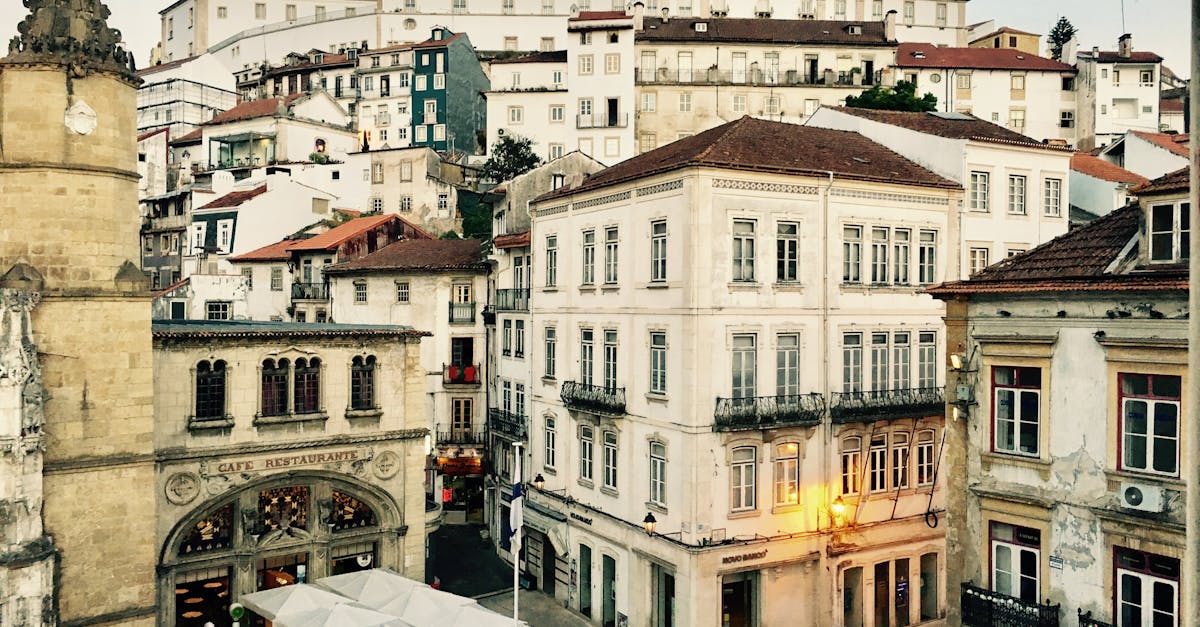
The Sé Velha is a formidable fortress-like cathedral that stands as one of the finest examples of Romanesque architecture in Portugal. Perched atop the steep streets of Coimbra, its austere design and well-preserved cloister offer a profound link to the city's medieval heritage.

Where the Óbidos lagoon meets the open Atlantic — calm lagoon water on one side, surf on the other, and a cliff bar above.

Striped candy-striped houses front a wide Atlantic beach at the mouth of the Aveiro lagoon — Portugal's most photogenic fishing village.

A pine-backed beach on the central coast — quiet, family-calm, with a clifftop village and forest shade behind the sand.

A long golden crescent below the famous sítio village — calm for swimming at the south end, giant-wave arena at the north headland.

The giant-wave break at Nazaré — site of the biggest waves ever surfed.

The Manueline-Gothic monastery of Santa Maria da Vitória, built to thank God for a battle won in 1385.

Portugal's largest church and the purest Cistercian abbey in the country, founded 1153.

Portugal's ancient university, set in a former royal palace above the Mondego.

Mainland Portugal's highest range — granite peaks, shepherd country, the source of the country's most famous cheese, and the only real ski area.