Caldo Verde
The Minho's signature kale-and-potato soup — light, green, and the country's comfort in a bowl.
The quiet heartbeat of Portuguese cuisine. It is a masterpiece of simplicity that proves luxury is found in the garden, not the bank account.
It is the singular dish that links every social stratum of Portuguese life through a common, comforting thread.
Where it comes from
Originating in the Minho province, the soup was the standard fuel for field laborers for centuries. It gained national prominence in the mid-20th century as a symbol of domestic frugality and resilience during leaner times. Today, it serves as the mandatory opening act for almost every significant feast or festival in the country.
The dish
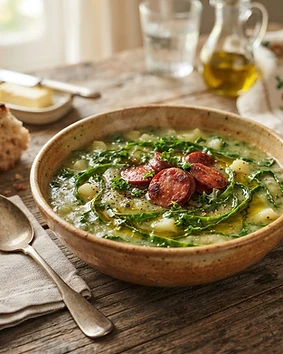
This emerald-hued soup features a base of potato and onion puree that provides a silky, warming foundation. Thin, chiffonade strips of dark green galega kale are folded in at the last possible second to preserve their bite, typically accompanied by a single, smoky slice of chouriço.
Key ingredients
- 01Galega kale
- 02Potatoes
- 03Chouriço
- 04Olive oil
- 05Onion
When to eat it
Best enjoyed during the festivities of St. Anthony in June, or any night when the air turns chilly.
Why you might skip it
The unadventurous may find the texture of shredded kale and mashed potato too monotonous.
Good to know
Every neighborhood tasca in Porto serves it, but look for the ones that hand-cut the kale rather than using machine-shredded greens.
Serve with
Anselmo Mendes
The winemaker known as 'the father of Alvarinho,' making handcrafted Vinho Verde from his cellar in Monção — including the Contacto and Expressões cuvées that redefined what the region could do.

Aveleda
The largest Vinho Verde producer and one of the most historic — a family estate since 1870, with beautiful gardens (designed by a Swiss landscape architect) and a tasting room an hour from Porto. Casal Garcia, the world's best-selling Vinho Verde, is made here.
Eat

Arroz de Lampreia
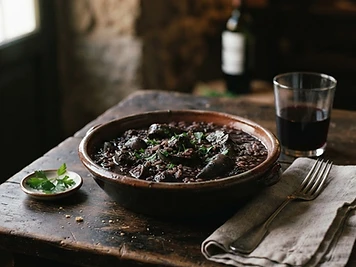
A rice stew of lamprey cooked in its own blood—the Minho's most distinctive river dish, served only in season.

Bacalhau à Lagareiro
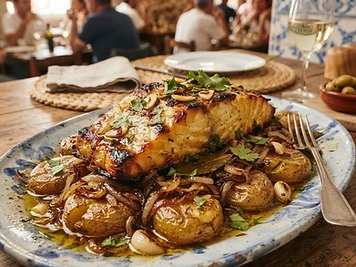
Salt cod roasted with olive oil and potatoes — one of the country's most beloved bacalhau preparations, born in the wine country.

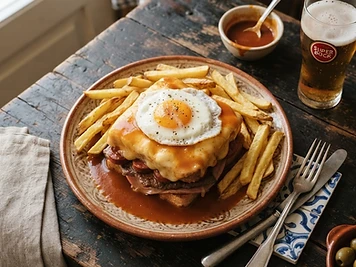
Francesinha
Porto's famously indulgent layered sandwich, blanketed in a spiced tomato-beer sauce.
Where to find it

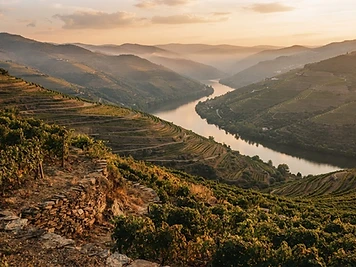
Douro Valley
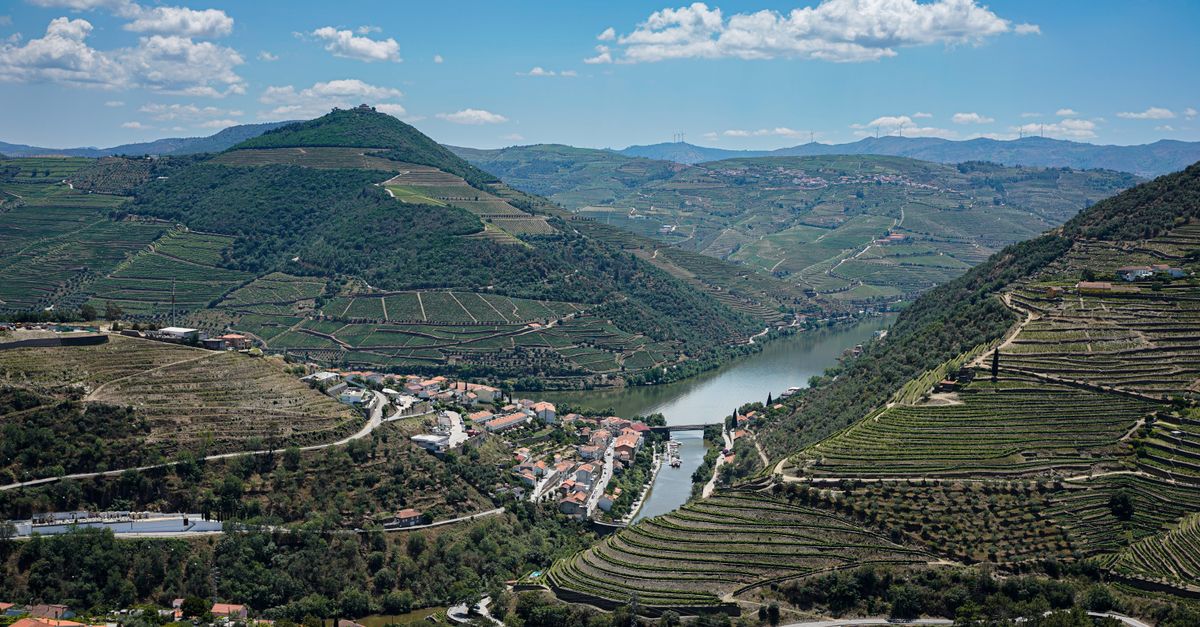
The world's oldest demarcated wine region — terraced vineyards climbing the banks of the Douro, port's birthplace, and one of the most beautiful river valleys in Europe.

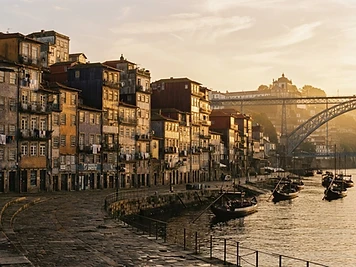
Porto
Portugal's second city — granite, port wine, the Douro waterfront and a working, lived-in heart that Lisbon has partly lost to tourism.
More to eat in Porto & North

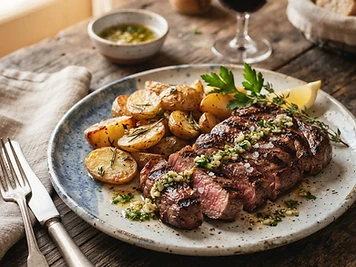
Posta Mirandesa
A thick, char-grilled veal steak from the Miranda plateau, characteristic of the northeast interior.

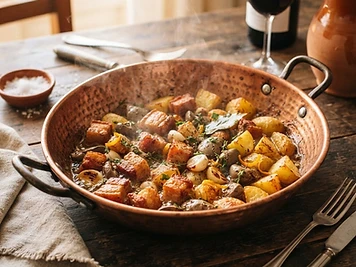
Rojões à Moda do Minho
The Minho's fried pork with potatoes — garlicky, orange-scented, and best with Vinho Verde.

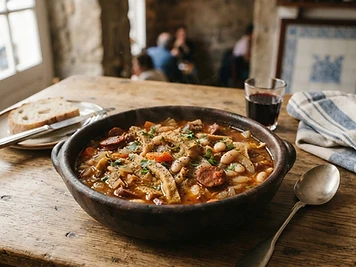
Tripas à Moda do Porto
Porto's white bean and tripe stew, the origin of the city's nickname for its residents, tripeiros.

Bufe Fagundes
Bufe Fagundes operates as a no-frills Porto tasca focused on northern Portuguese home cooking. It serves as a neighborhood canteen for daily, straightforward meals.

Café Majestic
Café Majestic occupies a 1921 Belle Époque space on Porto’s Rua de Santa Catarina. Its interior features preserved Art Nouveau woodwork and mirrors, marking the location as a historical center for the city's literary scene.
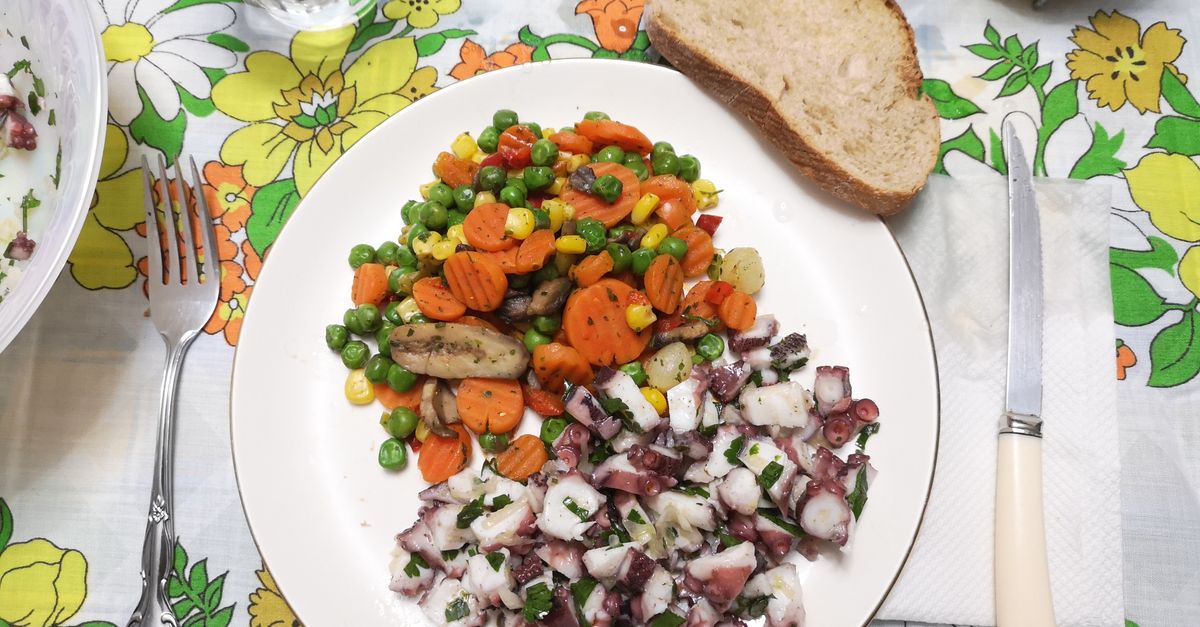
Cantina das Apos (Cantinha)
Cantina das Apos is a Porto tasca serving standard Portuguese home cooking. It provides a straightforward look at the city's food culture through daily menus of specific, fixed dishes.