Cabo da Roca
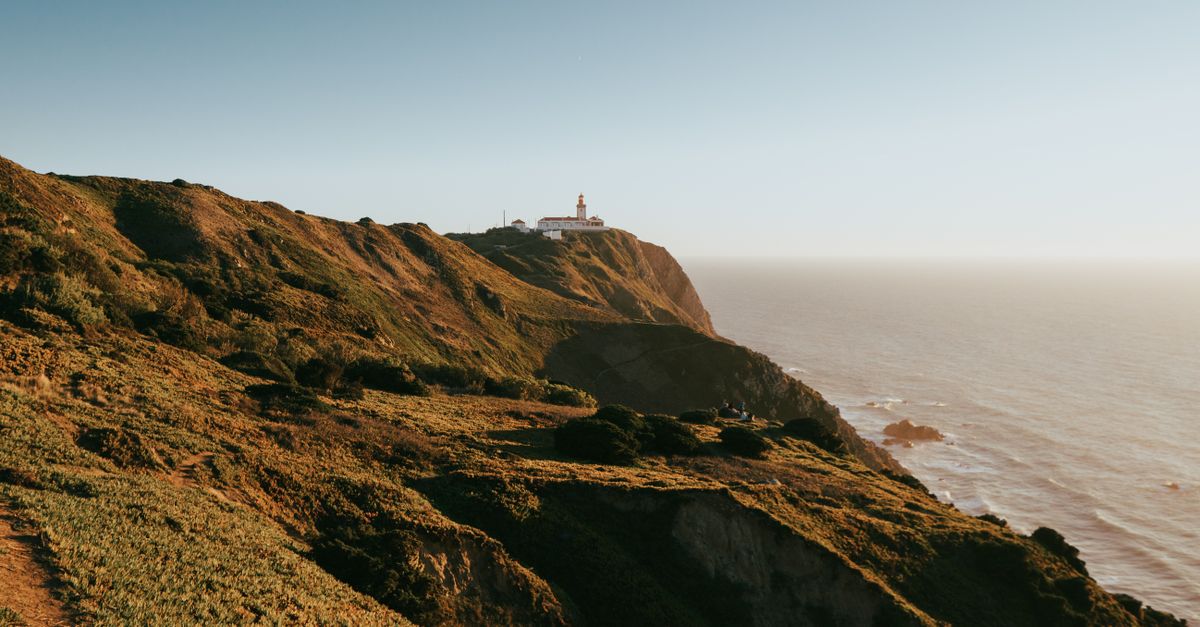
The westernmost point of mainland Europe — a cliff lighthouse above the Atlantic.
Worth a quick stop on a Sintra coast loop, but it's the view, not a destination.
Why go
The cliffs drop 140 meters to the ocean and the lighthouse sits at the edge of the continent. Ten minutes is enough; pair with the Sintra beaches or Cascais.
Why you might skip it
The site functions as a high-traffic transit point with limited infrastructure beyond a gift shop and restroom facilities. The sheer volume of tour buses and private vehicles often results in crowded observation areas that lack the seclusion found elsewhere along the Sintra-Cascais Natural Park coastline. The location lacks the historical depth of Sintra or the cultural complexity of central Lisbon, serving primarily as a visual marker rather than an immersive experience.
What to do
The primary activity involves walking the paved paths surrounding the lighthouse monument to view the Atlantic horizon and the rugged coastline extending north toward Praia da Adraga. Several dirt tracks lead away from the main parking area toward less congested cliff-edge viewpoints. Photographers document the sunset, while others observe the flora of the coastal heath, which includes hardy shrubs adapted to high salinity and constant salt-laden winds.
Getting there & around
Reach the cape via the N247 road by car from Sintra or Cascais; a large parking area is located on-site. Public buses also connect the site to the Sintra train station, though schedules are infrequent and require careful timing.
Common planning mistakes
Expectations of a secluded natural wilderness often lead to disappointment during peak hours when the parking lot reaches maximum capacity. Relying exclusively on public transit timing frequently results in extended waiting periods due to infrequent bus intervals. Overestimating the stability of the cliff edges often leads to movement beyond designated barriers, where loose shale and severe gusts create hazardous conditions for any movement.
Practical notes
Access occurs via the N247 road connecting Sintra and Cascais. A large, open-air parking lot accommodates buses and cars, though it fills by midday. Scotturb bus 1624 connects the location to Sintra station on a limited daily schedule. Paved walkways surround the monument, but the surrounding dirt paths consist of uneven earth and loose gravel. No specific entrance fees apply. Winds create significant wind chill, even when the thermometer indicates mild air temperatures.
More outdoors in Lisbon

Cabo Espichel
Cabo Espichel is a limestone promontory on the Setúbal Peninsula containing a lighthouse and the Sanctuary of Our Lady of the Cape. It provides an isolated, exposed view of the Atlantic coastline south of Lisbon.

Arrábida Natural Park
Arrábida Natural Park features a limestone ridge descending into the Atlantic south of Lisbon. The area contains Mediterranean scrubland and endemic plant species protected within a defined ecological sanctuary.

Arrábida Natural Park
A limestone park dropping from forested hills to clear turquoise coves — the best beaches near Lisbon, and the least known.

Estrada Marginal (Lisbon–Cascais)
The Estrada Marginal (N6) follows the Tagus Estuary from central Lisbon to Cascais. The route tracks the shoreline past 17th-century fortifications and residential neighborhoods, moving from the city edge into the Atlantic-facing towns of Estoril and Cascais.

Serra de Montejunto
Serra de Montejunto is a protected limestone range reaching 666 meters. The terrain contains limestone pavements and caves, serving as a habitat for endemic plants and birds of prey.

Sintra-Cascais Natural Park
This protected area spans granite hills and coastal cliffs, encompassing the forests and historic estates of the Serra de Sintra alongside the Atlantic shoreline.
We may earn a commission from bookings made through these links. It never changes what we recommend, or what we leave out.