Sintra
A fairy-tale royal hill town of palaces and forest — the Pena Palace, the Moorish Castle, Quinta da Regaleira, and the mist that makes it all otherworldly.
Essential, but it's the most over-touristed day trip in Portugal. Go early, go off-peak, or stay overnight.

Why go
The Pena Palace, the Moorish Castle, Regaleira's initiation well, Monserrate's gardens, and the cool, forested microclimate. Nothing else in Portugal looks like it.
Why you might skip it
Summer crowds are brutal; the shuttle queues and traffic can ruin the day. Cabo da Roca nearby is a windswept box-tick.
What to do
Pena Palace and park, Moorish Castle, Quinta da Regaleira, Monserrate, the old town; Cabo da Roca if time.
What to eat
Travesseiros and queijadas at Piriquita; local mountain cooking.
Where to stay
The old town to enjoy it after the day-trippers leave; a palace hotel for splurge.
Getting there & around
Train from Lisbon's Rossio station.
Walk + the 434 tourist shuttle; a car is a liability on the hill.
Common planning mistakes
Arriving at 11am in August; trying to do four palaces in a day; driving into the old town.
Less ideal for
Crowd-avoiders in July–August.
What's here

Sintra-Cascais Natural Park
This vast natural park protects a diverse landscape of forest, coastline, and heathland, intertwined with Sintra's romantic palaces and historic estates.

Castelo dos Mouros
Perched high above Sintra, the 8th-century Moorish Castle offers dramatic stone fortifications and some of the most spectacular panoramic views in Portugal. It is a rugged, atmospheric site that feels worlds apart from the opulence of nearby palaces.

Palácio Nacional de Sintra
The Palácio Nacional de Sintra serves as the best-preserved medieval royal residence in Portugal, defined by its iconic twin conical chimneys and rich collection of Mudéjar tiles. It stands as the historic heart of the town, bridging the gap between Moorish roots and the Manueline opulence of the Portuguese Renaissance.

Palácio de Monserrate
Palácio de Monserrate is a mesmerizing 19th-century villa that blends Gothic, Indian, and Moorish architectural motifs within one of the most significant botanical gardens in Portugal. It stands as a sublime example of Romantic-era exoticism tucked away from the main tourist throng of Sintra.

Palácio de Seteais
Palácio de Seteais is a neoclassical 18th-century palace turned luxury hotel, set against the dramatic, mist-covered backdrop of the Sintra mountains. It is a defining landmark of the town's romantic architectural legacy, famous for its grand triumphal arch and panoramic views of the Pena Palace.

Convento dos Capuchos
Deep within the forested hills of the Serra de Sintra, the Convento dos Capuchos is a stark, moss-covered 16th-century monastery where Franciscan monks once lived in extreme asceticism. Its rugged architecture, characterized by cork-lined cells and stone-hewn spaces, offers a profound contrast to the opulent palaces nearby.

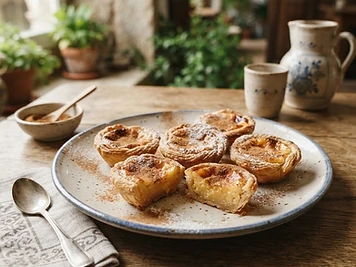
Queijadas de Sintra
Small, sealed cup pastries of cheese, egg and cinnamon — Sintra's signature sweet since the 16th century.

Praia Grande (Sintra)
A long open bay under the Sintra cliffs, with a dinosaur trackway in the rocks and a steady beach break — the Sintra coast's main surf beach.

Praia das Maçãs
A small river-mouth beach at the foot of the Sintra hills, reached by a vintage tram from Colares — gentle, family, and a slice of old Portugal.

Praia da Ursa
A wild, cliff-hemmed cove near Cabo da Roca — Portugal's westernmost point — reached by a steep, rough trail. No facilities, no road.

Pena Palace
The candy-colored Romanticist palace on a hill above Sintra — Portugal's most famous image.

Quinta da Regaleira
An esoteric estate of grottoes, tunnels, and the famous initiation well.

Praia da Adraga
A wild cliff-backed beach on the Sintra coast, with a sea arch and a small waterfall.
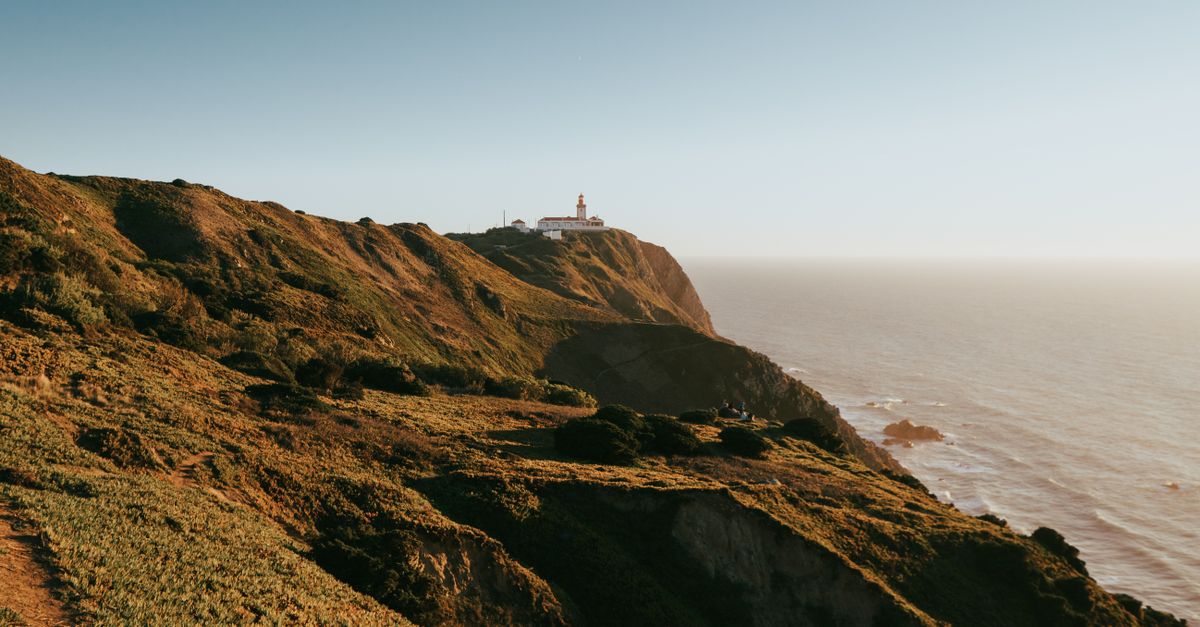
Cabo da Roca
The westernmost point of mainland Europe — a cliff lighthouse above the Atlantic.
Where it sits


