Belém
Lisbon's Age of Discovery quarter — the Jerónimos Monastery, the Belém Tower, and the original Pastéis de Belém.
Essential for first-timers; do it as a focused half-day, early.

Why go
Two UNESCO monuments, the riverfront, the Coach Museum, and the most famous pastry in the country. The whole Portuguese seafaring story in one district.
Why you might skip it
Crowded by 11am; a 15-minute tram from the center so easy to under-prioritize.
What to do
Jerónimos, Belém Tower, MAAT, the Coach Museum, Pastéis de Belém (the original).
What to eat
Pastéis de Belém — the original, with the secret recipe.
Where to stay
A day trip, not a bed. (Half a day)
Belém offers boutique hotels and guesthouses converted from historical mansions. These accommodations provide a quieter atmosphere than the central city districts. Noise levels remain low during the evening hours once the daytime crowds depart the waterfront. Rates reflect a premium for proximity to the river, though the trade-off is a thirty-minute commute to the nightlife and dining hubs of central Lisbon. Residential apartments provide a local alternative, though these often lack the air-conditioning found in modern hotel renovations.
Getting there & around
Take the 15E tram from central Lisbon or the Cascais line train from Cais do Sodré to the Belém station. A car is unnecessary and parking is notoriously difficult; public transit is more reliable and efficient.
The 15E tram connects central Lisbon to Belém in thirty minutes, though demand often leads to crowding. The Cascais line train from Cais do Sodré reaches the Belém station in seven minutes, followed by a ten-minute walk to the riverfront monuments. Parking is scarce and heavily restricted, making private vehicles inefficient. The area is flat along the Tagus River, facilitating movement on foot between major sites, though the walk from the train station involves crossing busy intersections.
Common planning mistakes
Going midday and queuing for everything; skipping the monastery interior.
Less ideal for
The neighborhood functions poorly as a base for an entire week, as the daily trek into central Lisbon consumes significant time. The focus on single-purpose historical monuments makes the area a poor choice for those seeking spontaneous exploration or varied nightlife. The constant churn of large tour groups creates an environment that lacks the residential character required for a long-term stay, while the limited culinary variety restricts options for those preferring diverse dining experiences each evening.
Practical notes
Museums and monuments in Belém observe closure on Mondays. The Jerónimos Monastery requires advance online booking for timed entry slots to avoid excessive waiting. Most sites operate between 10:00 and 18:00, with final admissions occurring thirty minutes prior to closing. Comfortable walking shoes are necessary due to the uneven stone paving along the waterfront and the extensive grounds of the Padrão dos Descobrimentos. Public restrooms are located near the train station and the primary tourist information center.
What's here

Palácio Nacional da Ajuda
The Palácio Nacional da Ajuda is a vast, incomplete neoclassical building that served as the final residence of the Portuguese royal family. The interior remains arranged as it was during the 19th-century monarchy.
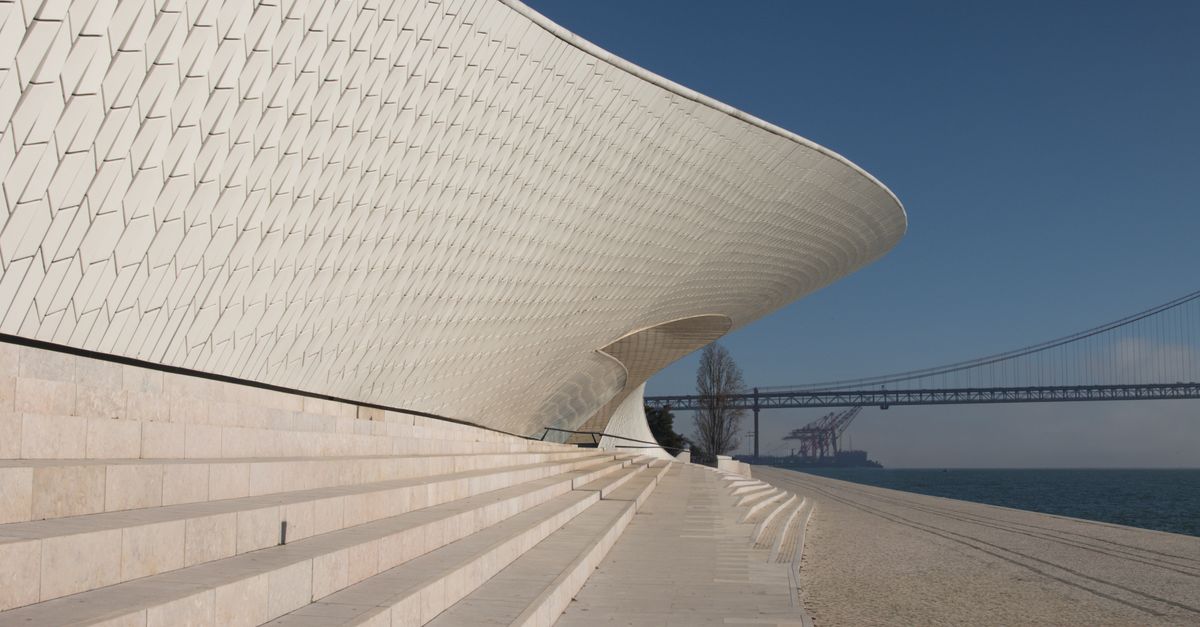
MAAT — Museu de Arte, Arquitetura e Tecnologia
MAAT occupies a low-profile structure on the Belém waterfront, housing galleries that explore intersections of art, architecture, and technology. It operates in tandem with the adjacent, early 20th-century Tejo Power Station.

Jerónimos Monastery
A primary example of Manueline architecture in Belém, constructed during the Portuguese Age of Discovery.

Belém Tower
A 16th-century fortress on the Tagus, built to protect the harbor and serve as a ceremonial point of departure for maritime explorers.
Where it sits


More places in Lisbon

Cascais
A former royal resort town at the mouth of the Tagus — beaches, a marina, and an easy, polished base west of Lisbon.

Ericeira
A whitewashed surf town on cliffs above the Atlantic — Portugal's surf capital and a World Surfing Reserve.

Setúbal
A working port and fishing city south of the Tagus — the gateway to the Arrábida and the best moscatel.


Sintra
A fairy-tale royal hill town of palaces and forest — the Pena Palace, the Moorish Castle, Quinta da Regaleira, and the mist that makes it all otherworldly.
We may earn a commission from bookings made through these links. It never changes what we recommend, or what we leave out.