MAAT — Museu de Arte, Arquitetura e Tecnologia
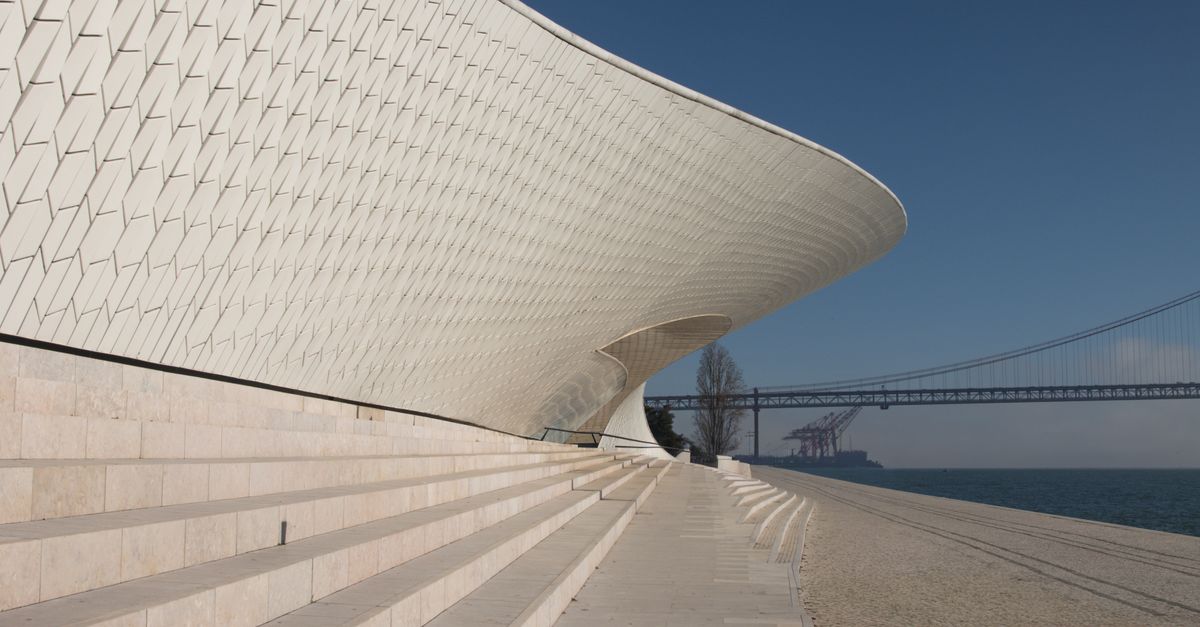
MAAT is a striking contemporary landmark in Belém that bridges art, architecture, and technology within a futuristic structure designed by AL_A. It seamlessly integrates a state-of-the-art exhibition hall with the preserved industrial legacy of the historic Tejo Power Station.
An essential pilgrimage for architecture buffs, though the revolving exhibition quality can vary.
Why go
The building itself is a masterpiece of light and curve, offering one of the best views of the 25 de Abril Bridge from its walkable rooftop. Visitors get the rare opportunity to contrast hyper-modern gallery spaces with the grit and grandeur of the neighboring early 20th-century power plant, providing a holistic look at Portugal's industrial evolution.
Why you might skip it
Those seeking a traditional, historical museum experience or deep dives into Portuguese art history may find the contemporary, often experimental exhibitions disconnected or overly abstract.
What to do
Explore the expansive, fluid exhibition galleries of the main building before heading to the Tejo Power Station to see the colossal original boilers and turbines. Be sure to walk up the exterior ramp to the rooftop promenade for panoramic views of the Tagus River.
History & origin
Inaugurated in 2016, the museum complex is anchored by the Central Tejo, a thermoelectric power station built in 1908 that provided electricity to Lisbon for decades. The new wing, designed by British architect Amanda Levete, was specifically built to revitalize this riverfront industrial zone.
Getting there & around
Located directly on the waterfront in Belém, it is best reached by the Cascais line train to Belém station or the E15 tram, both of which require a short walk to the river edge.
The site is fully accessible with ramps throughout the new building and elevators connecting the levels of the power station.
Common planning mistakes
Many visitors neglect to fully explore the historic Power Station, focusing only on the new, photogenic wing, thereby missing the fascinating steam machinery displays.
Less ideal for
Travelers with limited time in Lisbon who prefer classical art or those sensitive to high-concept, non-traditional gallery formats.
Practical notes
Closed on Tuesdays. Tickets vary depending on whether you visit one or both buildings. The site is fully wheelchair accessible and photography is generally permitted.
Where it sits


