Santuário Nacional de Cristo Rei
Located on the southern bank of the Tagus in Almada, the Santuário Nacional de Cristo Rei is a 110-meter-tall monument modeled after the Christ the Redeemer statue in Rio de Janeiro. It provides a vantage point over Lisbon, the 25 de Abril Bridge, and the river estuary.
The monument provides the clearest aerial perspective of the Lisbon cityscape; the transit to Almada is necessary only for those specifically interested in this structural vantage point.

Why go
The observation deck sits 82 meters above ground level. From here, the 25 de Abril Bridge and the scale of the Tagus estuary are visible in a way not possible from the city center, offering a map-like view of the capital's layout.
Why you might skip it
Travelers with limited time may find the transit to Almada inconvenient, as the site does not offer a direct view of the monuments in Belém. Fog, frequent in winter, often obscures the city view.
What to do
Ascend by elevator to the pedestal observation deck, walk the grounds, and visit the Chapel of Our Lady of Peace inside the base.
History & origin
Inaugurated in 1959, the monument was built as a votive gesture after Portugal remained neutral during World War II. The structure consists of a 28-meter statue mounted on a 75-meter pedestal, constructed in the style of Estado Novo monumental architecture.
Getting there & around
Take the ferry from Lisbon to Cacilhas, then transfer to the 3001 bus or a taxi. Parking is available for those arriving by car.
The site is pedestrian-accessible, with an elevator providing access to the viewing platform.
Work out how Santuário Nacional de Cristo Rei connects to another stop
Common planning mistakes
Underestimating the cumulative travel time of the ferry and the connecting bus; arriving during heavy cloud cover when the city view is obscured.
Less ideal for
Travelers with tight itineraries or those affected by vertigo.
Practical notes
The facility is accessible, though the top deck requires the use of an elevator. Verify opening hours before departure, as they change seasonally.
Where it sits


More history in Lisbon

Belém Tower
A 16th-century fortress on the Tagus, built to protect the harbor and serve as a ceremonial point of departure for maritime explorers.

Aqueduto das Águas Livres
The Aqueduto das Águas Livres is an 18th-century stone structure spanning the Alcântara valley. It is notable for its survival of the 1755 earthquake and its status as a primary conduit for Lisbon’s historic water supply.
Castelo de São Jorge
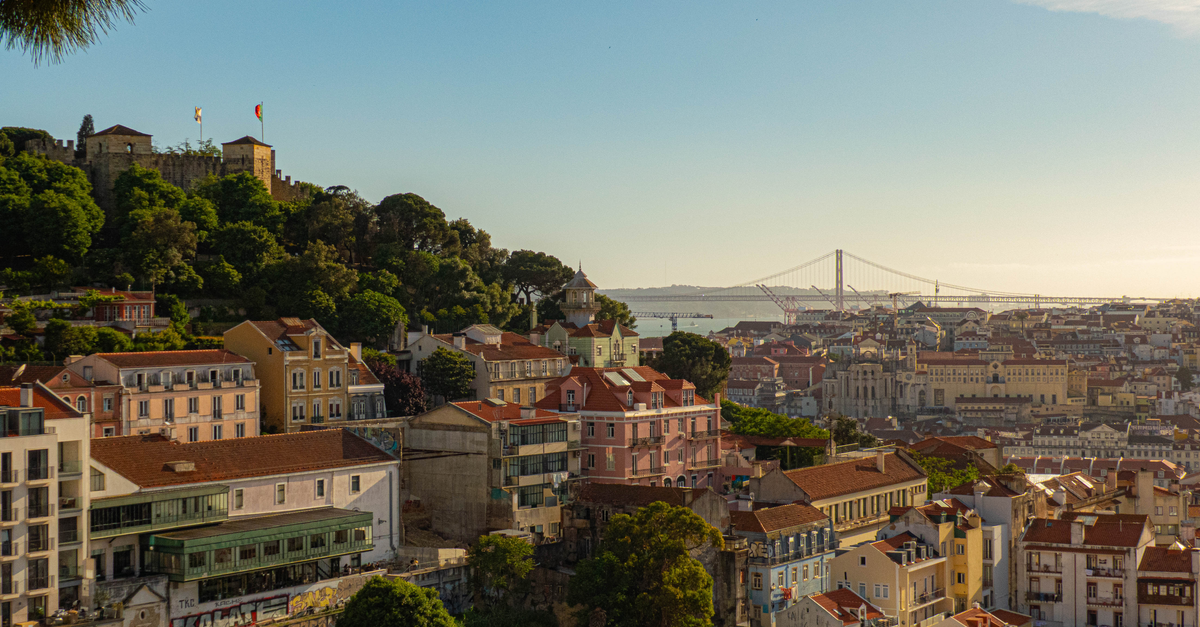
Occupying the highest hill in the city, Castelo de São Jorge provides a clear vantage point across Lisbon and the Tagus River. The fortress tracks Lisbon's transition from a Moorish fortification to a royal seat.

Castelo dos Mouros
High above Sintra, the 8th-century Moorish Castle features stone fortifications on granite ridges. The site consists of rugged terrain and ruins distinct from the ornate palaces nearby.

Convento do Carmo
The roofless walls of the Convento do Carmo remain from the 1755 earthquake. The site functions as an archaeological museum, displaying a collection of artifacts within the open-air nave.

Convento dos Capuchos
Tucked into the hills of the Serra de Sintra, the Convento dos Capuchos is a 16th-century monastery where Franciscan monks lived in asceticism. Its design, featuring cork-lined cells and stone-hewn spaces, contrasts with the opulent palaces elsewhere in Sintra.
We may earn a commission from bookings made through these links. It never changes what we recommend, or what we leave out.