Elevador de Santa Justa
The Elevador de Santa Justa is a neo-Gothic iron lift designed by a student of Gustave Eiffel that connects the Baixa district to the higher-altitude Largo do Carmo. It operates as public transit and represents Lisbon's Industrial Age ironwork.
An architectural fixture best viewed from the street level; the multi-hour queues at the summit frequently outweigh the utility of the ride.

Why go
The structure is an example of late-19th-century industrial design, characterized by iron lattice and decorative filigree. From the top platform, the view looks over the Baixa street grid toward the Carmo Convent ruins.
Why you might skip it
Boarding lines reach multi-hour waits during peak months, and the cabin interior provides little space. Those on a fixed schedule can access equivalent elevations by walking the adjacent slopes.
What to do
Observe the ironwork by Raoul Mesnier du Ponsard from the Rua de Santa Justa base. Use the elevator for transit to the upper level, then exit onto the bridge connecting to Largo do Carmo and the Carmo Convent ruins.
History & origin
Inaugurated in 1902, the elevator was steam-powered until its 1907 conversion to electricity. It was built to bridge the vertical gap between the lower city and the Bairro Alto district.
Getting there & around
The lower entrance is on Rua de Santa Justa in Baixa; the upper entrance is in Bairro Alto.
The site is limited to its vertical footprint; the upper landing opens directly into the Bairro Alto pedestrian network.
Work out how Elevador de Santa Justa connects to another stop
Common planning mistakes
Purchasing individual tickets at the lift entrance instead of using 'Viva Viagem' transit credit.
Less ideal for
Travelers with fixed itineraries, those who avoid confined spaces, or anyone averse to standing in extended, unshaded queues.
Practical notes
The elevator is often covered by Carris public transport passes; confirm current queue procedures before arriving. The upper viewing deck requires a separate fee for those who do not use the elevator.
Where it sits


More history in Lisbon

Belém Tower
A 16th-century fortress on the Tagus, built to protect the harbor and serve as a ceremonial point of departure for maritime explorers.

Aqueduto das Águas Livres
The Aqueduto das Águas Livres is an 18th-century stone structure spanning the Alcântara valley. It is notable for its survival of the 1755 earthquake and its status as a primary conduit for Lisbon’s historic water supply.
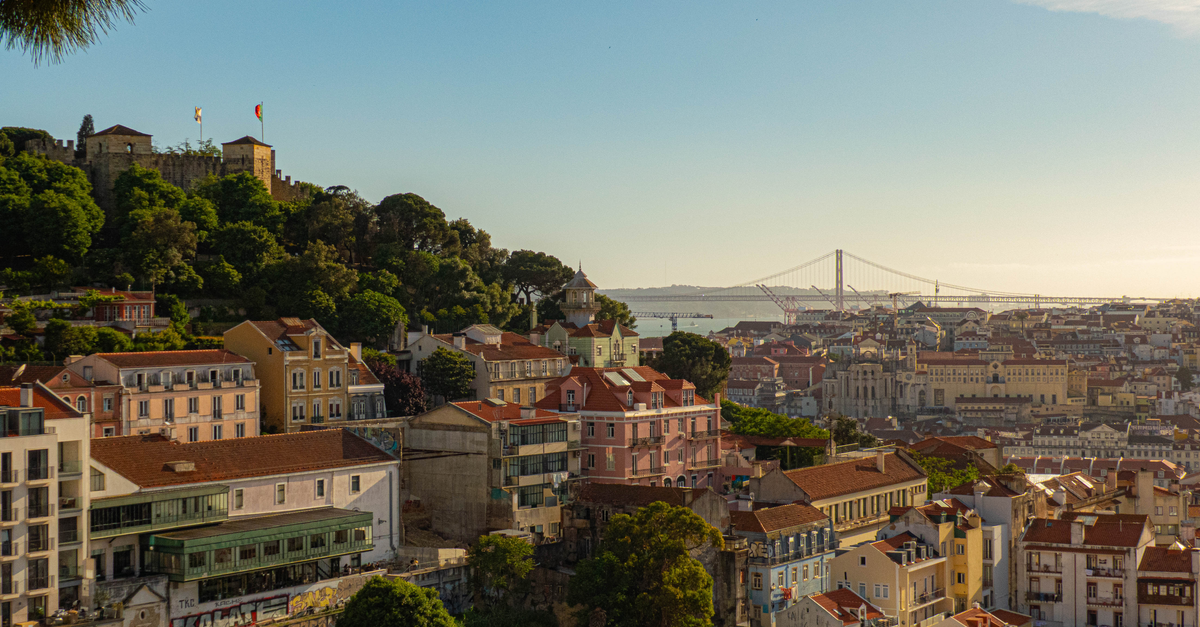
Castelo de São Jorge
Occupying the highest hill in the city, Castelo de São Jorge provides a clear vantage point across Lisbon and the Tagus River. The fortress tracks Lisbon's transition from a Moorish fortification to a royal seat.

Castelo dos Mouros
High above Sintra, the 8th-century Moorish Castle features stone fortifications on granite ridges. The site consists of rugged terrain and ruins distinct from the ornate palaces nearby.

Convento dos Capuchos
Tucked into the hills of the Serra de Sintra, the Convento dos Capuchos is a 16th-century monastery where Franciscan monks lived in asceticism. Its design, featuring cork-lined cells and stone-hewn spaces, contrasts with the opulent palaces elsewhere in Sintra.

Festa do Mar (Cascais)
Festa do Mar is a ten-day August festival in Cascais featuring a mix of religious processions and nightly open-air concerts along the waterfront.
We may earn a commission from bookings made through these links. It never changes what we recommend, or what we leave out.