Convento dos Capuchos
Tucked into the hills of the Serra de Sintra, the Convento dos Capuchos is a 16th-century monastery where Franciscan monks lived in asceticism. Its design, featuring cork-lined cells and stone-hewn spaces, contrasts with the opulent palaces elsewhere in Sintra.
The most isolated site in Sintra, providing a quiet, contemplative experience that lacks the grandiosity of nearby estates.

Why go
It demonstrates the reality of monastic life, defined by poverty and isolation. The architecture is built directly into boulders and the forest, creating a layout that reflects the monks' rejection of material comforts.
Why you might skip it
Skip it if you expect ornate interiors or royal history; the site is deliberately primitive. Those with limited mobility should note the steep, uneven paths and narrow stone doorways.
What to do
Wander through the cork-lined cells, explore the kitchen, and see the chapel built into the mountain rock. Walk the surrounding woodland trails to view the exterior structure.
History & origin
Founded in 1560 by D. Álvaro de Castro, the monastery accommodated Franciscan monks who sought seclusion. It remained in use until the dissolution of religious orders in 1834, after which it fell into disrepair.
Getting there & around
Located in the Sintra-Cascais Natural Park, it is accessible via the winding Estrada dos Capuchos; parking is limited to a small dirt lot nearby.
The site is compact but requires walking over damp, uneven stone paths and maneuvering through very narrow, low-ceilinged passageways.
Common planning mistakes
The biggest mistake is attempting to include it in a 'same-day' itinerary with multiple major palaces; it is located far from the town center and requires a dedicated trip.
Less ideal for
Travelers expecting palace interiors or those with significant physical mobility limitations.
Practical notes
Opening hours change seasonally; confirm before visiting. Sturdy, non-slip footwear is essential due to high moisture levels causing slippery floors. Photography is permitted, but the low light levels inside require steady hands or a fast lens.
Where it sits


More history in Lisbon

Jerónimos Monastery
A primary example of Manueline architecture in Belém, constructed during the Portuguese Age of Discovery.

Aqueduto das Águas Livres
The Aqueduto das Águas Livres is an 18th-century stone structure spanning the Alcântara valley. It is notable for its survival of the 1755 earthquake and its status as a primary conduit for Lisbon’s historic water supply.

Belém Tower
A 16th-century fortress on the Tagus, built to protect the harbor and serve as a ceremonial point of departure for maritime explorers.
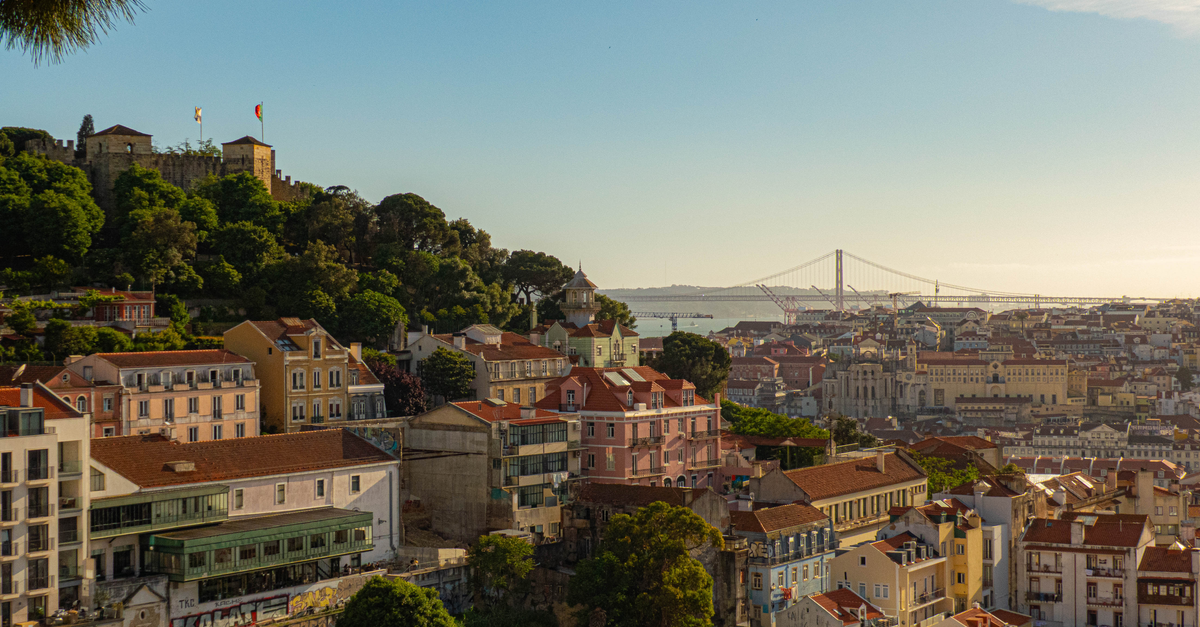
Castelo de São Jorge
Occupying the highest hill in the city, Castelo de São Jorge provides a clear vantage point across Lisbon and the Tagus River. The fortress tracks Lisbon's transition from a Moorish fortification to a royal seat.

Convento do Carmo
The roofless walls of the Convento do Carmo remain from the 1755 earthquake. The site functions as an archaeological museum, displaying a collection of artifacts within the open-air nave.

Elevador de Santa Justa
The Elevador de Santa Justa is a neo-Gothic iron lift designed by a student of Gustave Eiffel that connects the Baixa district to the higher-altitude Largo do Carmo. It operates as public transit and represents Lisbon's Industrial Age ironwork.
We may earn a commission from bookings made through these links. It never changes what we recommend, or what we leave out.