Museu Nacional de Arte Antiga
The Museu Nacional de Arte Antiga holds the national collection of painting, sculpture, and decorative arts from the Middle Ages to the 19th century. It documents the development of Portuguese art and the cultural intersections resulting from 15th and 16th-century maritime exploration.
A primary site for examining the visual record of Portugal’s development, distinct from the city’s more casual attractions.

Why go
The collection tracks the cultural shifts of Portugal during its period of global expansion. Key holdings include the 15th-century Panels of Saint Vincent by Nuno Gonçalves, along with a range of Asian and African artifacts acquired during early maritime trade.
Why you might skip it
Visitors focused on 20th-century movements or those uninterested in religious iconography and historical decorative arts will find the scope of the permanent collection narrow.
What to do
Prioritize the second floor for the Panels of Saint Vincent, then examine the goldsmithing collection and the Japanese Namban screens depicting early contact between the Portuguese and Japan.
History & origin
Opened in 1884, the museum occupies the 17th-century Palácio de Alvor. Its collection originated from the nationalization of religious property following the suppression of church orders.
Getting there & around
Situated in the Janelas Verdes district; reachable via the 15E tram or bus lines 60E, 714, 727, and 773.
The building uses a historic layout with multiple levels. Elevators provide access to different floors.
Work out how Museu Nacional de Arte Antiga connects to another stop
Common planning mistakes
Underestimating the volume of the collection; visitors frequently exhaust their time on the lower levels, failing to reach the decorative arts galleries on the upper floor.
Less ideal for
Visitors with short itineraries in Lisbon or those requiring light, high-turnover museum experiences.
Practical notes
Closed Mondays. Photography without flash is permitted. A café with a river-facing terrace is on-site.
Where it sits


More history in Lisbon

Aqueduto das Águas Livres
The Aqueduto das Águas Livres is an 18th-century stone structure spanning the Alcântara valley. It is notable for its survival of the 1755 earthquake and its status as a primary conduit for Lisbon’s historic water supply.

Belém Tower
A 16th-century fortress on the Tagus, built to protect the harbor and serve as a ceremonial point of departure for maritime explorers.
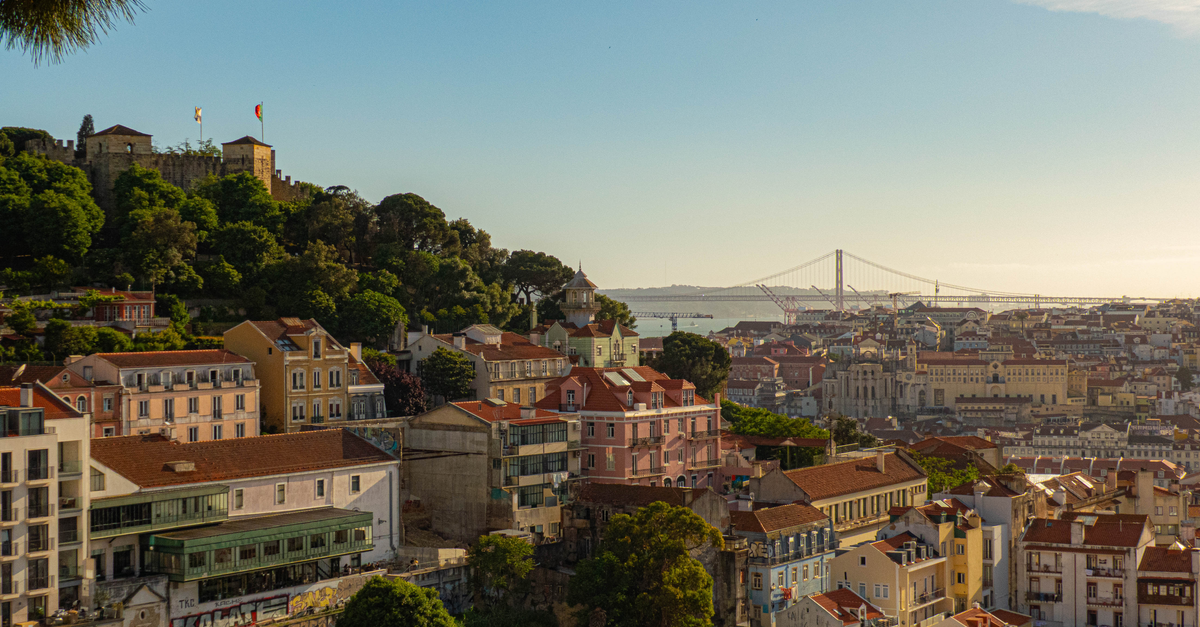
Castelo de São Jorge
Occupying the highest hill in the city, Castelo de São Jorge provides a clear vantage point across Lisbon and the Tagus River. The fortress tracks Lisbon's transition from a Moorish fortification to a royal seat.

Castelo dos Mouros
High above Sintra, the 8th-century Moorish Castle features stone fortifications on granite ridges. The site consists of rugged terrain and ruins distinct from the ornate palaces nearby.

Convento do Carmo
The roofless walls of the Convento do Carmo remain from the 1755 earthquake. The site functions as an archaeological museum, displaying a collection of artifacts within the open-air nave.

Convento dos Capuchos
Tucked into the hills of the Serra de Sintra, the Convento dos Capuchos is a 16th-century monastery where Franciscan monks lived in asceticism. Its design, featuring cork-lined cells and stone-hewn spaces, contrasts with the opulent palaces elsewhere in Sintra.
We may earn a commission from bookings made through these links. It never changes what we recommend, or what we leave out.