Praia do Barril
Access this island beach via a miniature train crossing the Ria Formosa. The site features long, duned sand and a village of former tuna-fishing houses.
The miniature train and the anchor graveyard distinguish Praia do Barril from other Algarve beaches. It is a functional excursion for families and those interested in coastal industry history.

Why go
The transit across the lagoon, the collection of rusted anchors left by the defunct tuna fleet, and the stretch of island sand differentiate this location from the mainland coastline.
Why you might skip it
The requirement of a miniature train transfer and a walk across the dunes limits spontaneous access to the shoreline. Large crowds occupy the sand during peak summer months, and the commercial infrastructure dominates the central area. The beach lacks the seclusion found on less developed barrier islands, and the reliance on a fixed transport schedule restricts flexibility for those preferring unrestricted movement between the mainland and the coast.
What to do
The miniature train traverses the salt marshes from Pedras d'El-Rei to the island edge. The anchor graveyard displays hundreds of rusted implements from the defunct tuna-fishing industry embedded in the dunes. The former fishermen's cottages now house cafes and retail stalls, while the extensive sandbar provides space for swimming and sunbathing. Wooden walkways protect the dune ecosystem, and the coastline extends for several kilometres in either direction, offering space for uninterrupted beach walks away from the primary station.
Getting there & around
Drive or take a taxi to the Pedras d'El-Rei complex near Santa Luzia, where a parking lot serves as the terminus. From there, cross the footbridge to reach the miniature train station that carries passengers across the salt marshes to the beach.
Common planning mistakes
Overestimating the speed of access leads to frustration, as the train schedule dictates transit times rather than immediate demand. Assuming the beach is accessible by car ignores the requirement of the train or the long trek across the marshes. Many arrivals fail to explore beyond the central station area, missing the quieter stretches of sand situated further along the coast where the density of sunshades drops significantly.
Practical notes
Parking exists at the Pedras d'El-Rei complex, where a concrete footbridge leads to the train station. Train tickets remain separate from vehicle parking fees. The walk from the station to the water requires crossing wooden boardwalks spanning the dunes, and the beach lacks shade beyond the rented umbrellas available near the village. Carrying water and sun protection is necessary, as the exposed environment remains subject to intense solar radiation throughout the midday period.
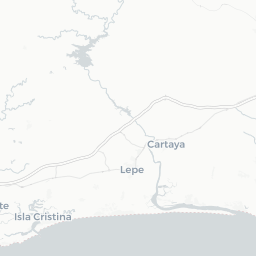
Where it sits




More beaches in Algarve
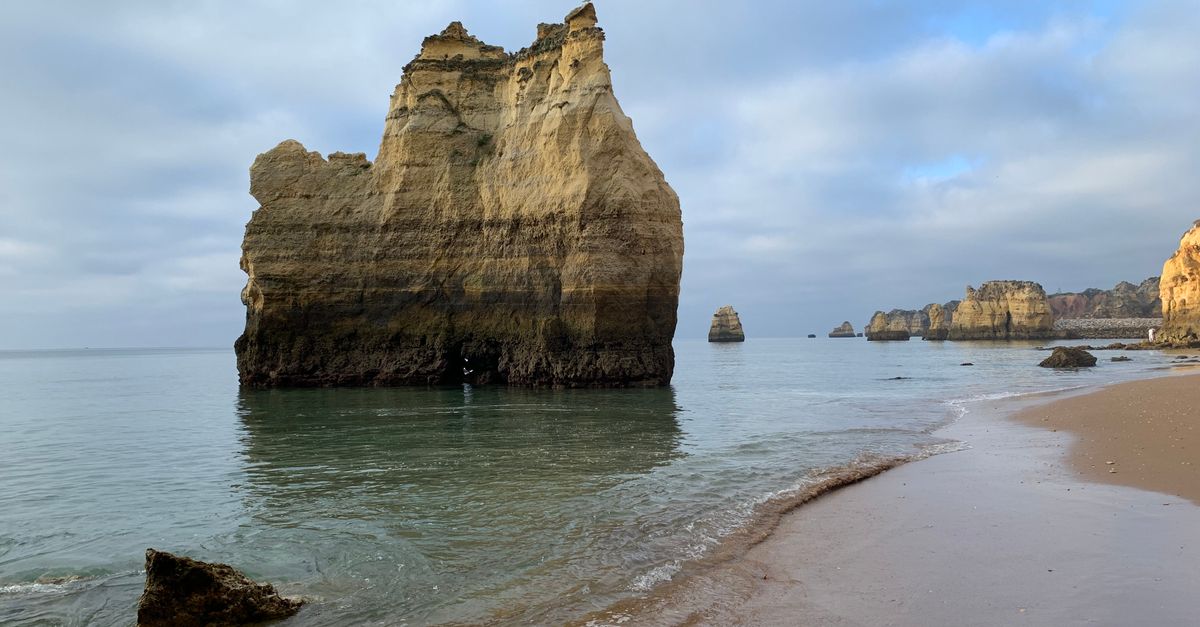
Praia da Falésia
Six kilometers of golden cliff-backed sand between Albufeira and Vilamoura.
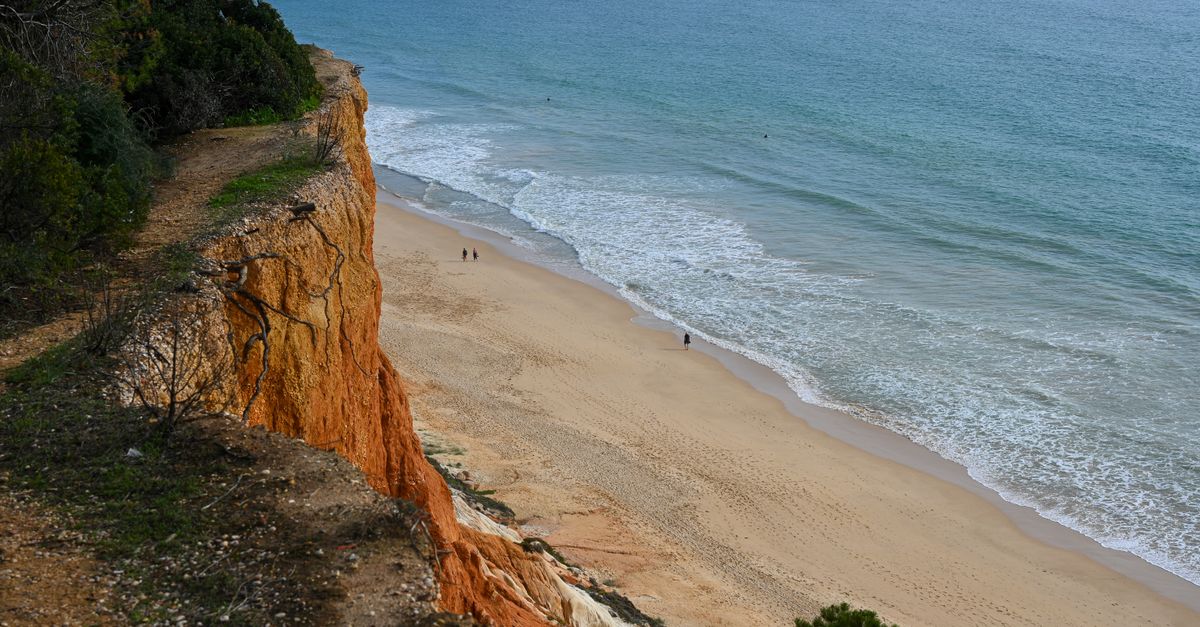
Praia da Rocha
The Algarve's primary beach: a long stretch of sand backed by limestone cliffs and a developed promenade in Portimão.
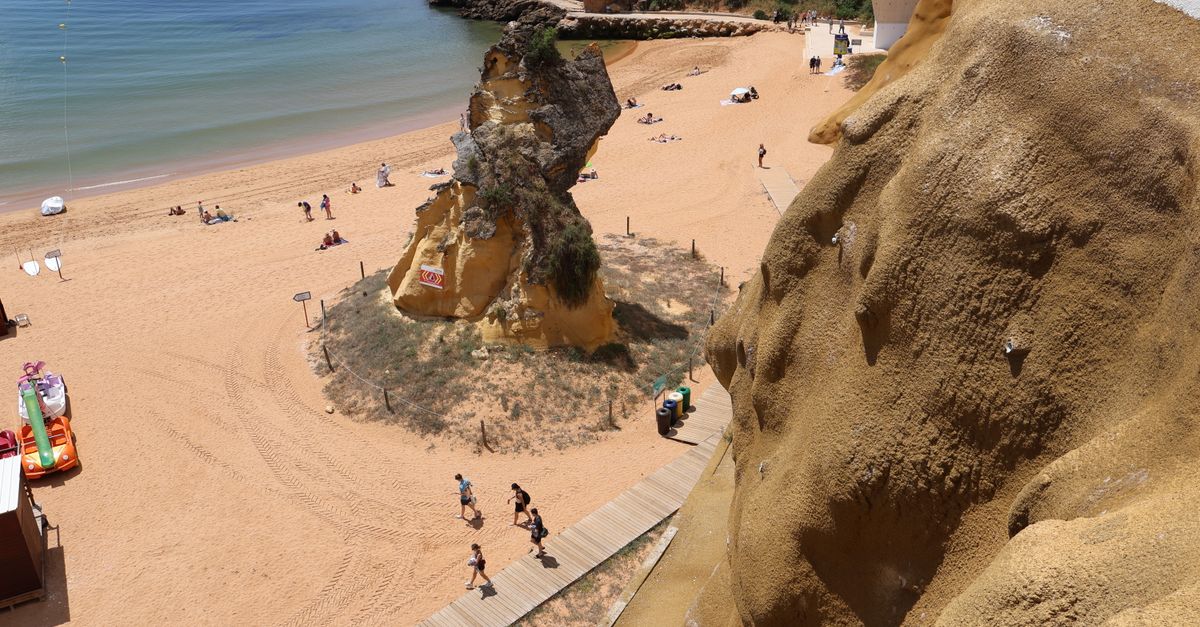
Praia de Albandeira
A small, sheltered cove near Lagoa with a natural arch, calm turquoise water, and a tiny fisherman's ramp.
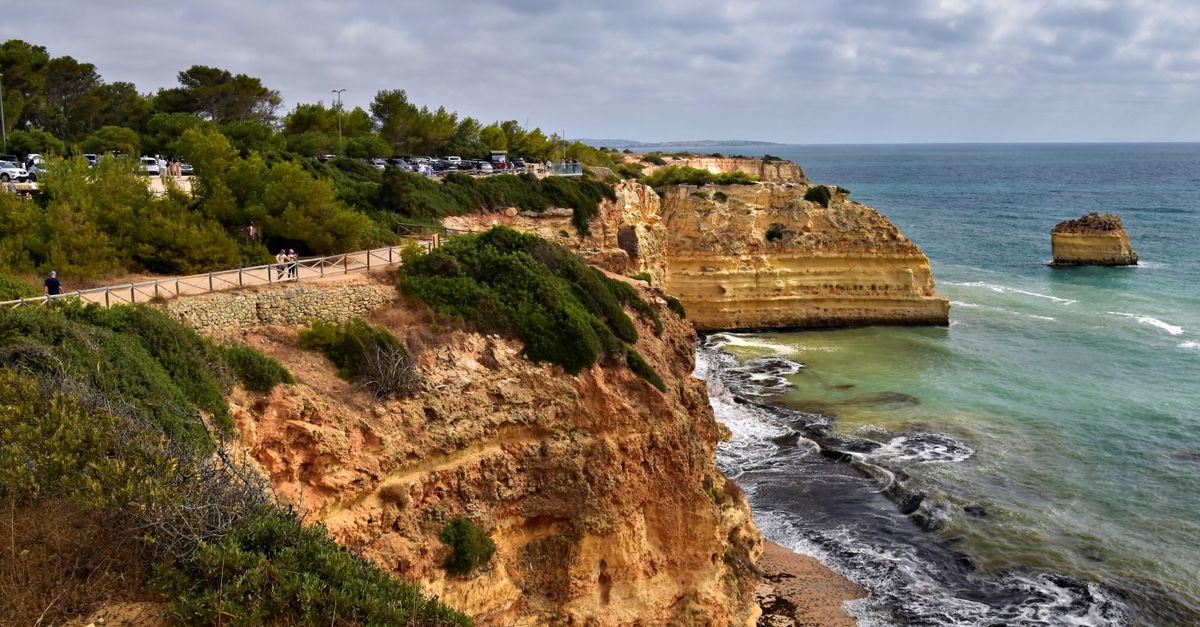
Praia de Benagil
A fishing cove and the launch point for the Algar de Benagil sea cave; the site consists of a narrow sand strip, kayak rentals, and boat traffic.
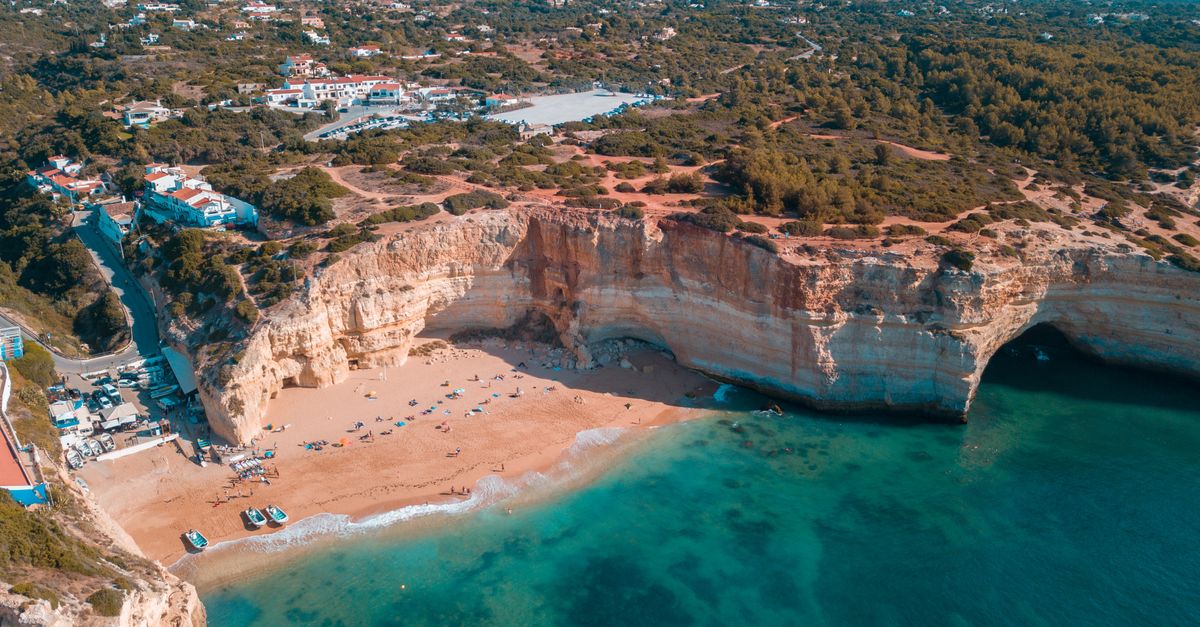
Praia de Dona Ana
Lagos beach defined by sandstone cliffs and sea stacks accessible via wooden stairs.

Praia de Odeceixe
The Ribeira de Seixe enters the Atlantic through a cliff-enclosed bay, creating a river-beach hybrid on the Costa Vicentina.
We may earn a commission from bookings made through these links. It never changes what we recommend, or what we leave out.