Livraria Lello
Porto's famously beautiful neo-gothic bookshop, with a forked crimson staircase.
A genuine landmark — but book a timed ticket, go early, or skip it. The queue is the attraction's worst feature.

Why go
The staircase and stained-glass ceiling are real; the crowds and the ticketing rigmarole are the price. It's worth one visit if you time it right.
Why you might skip it
The extreme overcrowding often obscures the architectural details, and the necessity of navigating a massive, organized tourist queue can diminish the romanticized experience of visiting a bookstore.
What to do
Admire the intricate wood-carved shelving that extends to the ceiling, walk the famous crimson-painted forked staircase, and observe the decorative plasterwork that mimics carved timber. Browse the curated selection of Portuguese and international literature.
History & origin
Opened in 1906, the building was designed by engineer Francisco Xavier Esteves. Its Neo-Gothic facade features elaborate carvings, while the interior showcases Art Nouveau influences and a striking stained-glass skylight bearing the motto Decus in Labore.
Getting there & around
Located in central Porto near the Torre dos Clérigos; leave the car behind as parking is scarce and the streets are narrow. The shop is accessible by foot from the Aliados metro station or a short walk from the Ribeira district.
Common planning mistakes
Arriving without a pre-purchased voucher, failing to check the mandatory online booking system, and ignoring the designated queue lines that snake along the street.
Less ideal for
Travelers with limited mobility, as the store is tight and frequently crowded, and those seeking a quiet, meditative environment for reading.
Practical notes
Entry requires a paid voucher, which can be deducted from the price of a book purchase inside. The bookstore is located in the Rua das Carmelitas; check the official website for real-time capacity and ticket availability.
More history in Porto & North

Muralhas Fernandinas
The Muralhas Fernandinas are the fragmented 14th-century defensive stone fortifications of Porto. They trace the city's medieval perimeter and serve as elevated viewpoints overlooking the Douro River.

Ponte Medieval de Ponte de Lima
This structure spans the Lima River, featuring Roman foundations and medieval Gothic arches. It serves as the namesake of the town of Ponte de Lima, functioning both as a pedestrian crossing and a preserved element of regional infrastructure.

São Bento Station
São Bento Station displays over 20,000 traditional Portuguese azulejo tiles across its foyer. It functions as a transit hub and a site for observing early 20th-century decorative design.
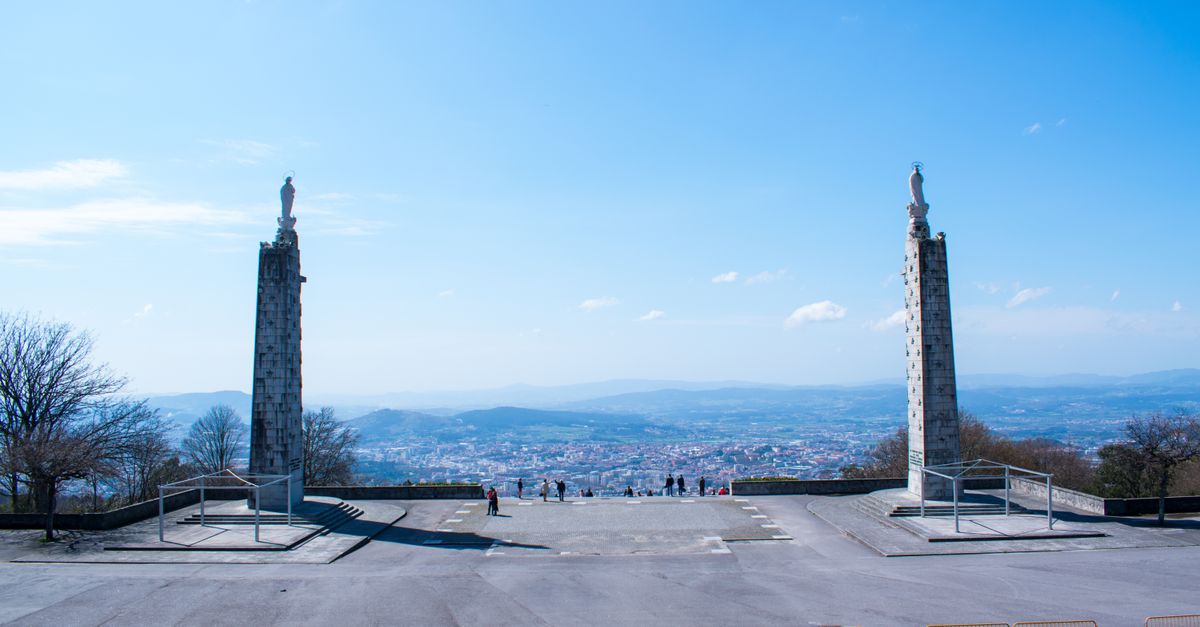
Bom Jesus do Monte
Bom Jesus do Monte is a UNESCO World Heritage sanctuary on a wooded hillside overlooking Braga. The site centers on a Baroque, zig-zagging granite staircase and a 19th-century church.

Capela das Almas
The Capela das Almas on Rua de Santa Catarina is clad in nearly 16,000 blue-and-white azulejo tiles. It documents the regional application of ceramic panels to building exteriors.
Caretos de Podence (Entrudo)
The Caretos de Podence are UNESCO-recognized masqueraders who appear in the village of Podence during Entrudo, wearing fringed costumes and brass bells. The tradition persists as an Iberian pre-Roman custom that alters the routine of this Transmontano village.
We may earn a commission from bookings made through these links. It never changes what we recommend, or what we leave out.