Capela das Almas
The Capela das Almas on Rua de Santa Catarina is clad in nearly 16,000 blue-and-white azulejo tiles. It documents the regional application of ceramic panels to building exteriors.
A quick stop for those documenting tile work and the specific architectural style of central Porto.

Why go
The facade features large-scale tile panels illustrating the lives of St. Francis of Assisi and St. Catherine. The exterior displays a level of ceramic density rarely found on other buildings in the city.
Why you might skip it
Those expecting a grand interior or a quiet space will find the interior modest and the site located on a high-traffic pedestrian street.
What to do
Examine the narrative tile work installed by Eduardo Leite in 1929. The interior contains a neoclassical altar, though the building’s primary function remains an active parish chapel.
What to eat
The nearby Bolhão market and surrounding side streets host traditional bakeries serving the classic pastel de nata. These egg custard tarts feature blistered, caramelized tops and crisp, buttery puff pastry layers, contrasting with the soft, sweet center. Nearby establishments also offer the francesinha, a robust local sandwich layered with various cured meats, covered in melted cheese, and bathed in a thick, spiced beer-based sauce, providing a substantial caloric intake for those navigating the steep inclines of Porto.
History & origin
Although the site dates to the 18th century, the azulejo facade was installed in 1929. It remains an active parish church dedicated to the souls in purgatory.
Getting there & around
Located on Rua de Santa Catarina, within walking distance of the Bolhão market.
The chapel is a compact street-level site within the primary shopping district.
Common planning mistakes
Treating the building as a simple storefront rather than examining the detail of the individual tile panels.
Less ideal for
Travelers prioritizing quiet settings or interior art collections.
Practical notes
Entry is free; donations are accepted. Maintain decorum as it is an active religious site. The building is street-level accessible.
Where it sits





More history in Porto & North
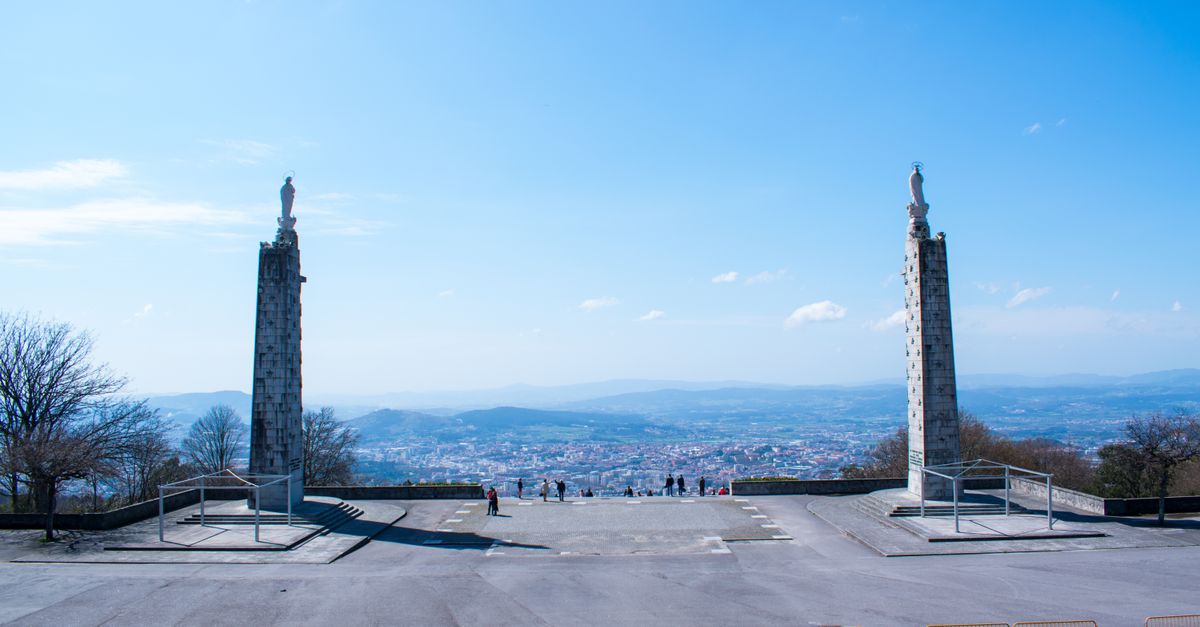
Bom Jesus do Monte
Bom Jesus do Monte is a UNESCO World Heritage sanctuary on a wooded hillside overlooking Braga. The site centers on a Baroque, zig-zagging granite staircase and a 19th-century church.
Caretos de Podence (Entrudo)
The Caretos de Podence are UNESCO-recognized masqueraders who appear in the village of Podence during Entrudo, wearing fringed costumes and brass bells. The tradition persists as an Iberian pre-Roman custom that alters the routine of this Transmontano village.

Casa da Música
Designed by Rem Koolhaas, Casa da Música is a venue for classical and experimental music in Porto. Its irregular, faceted form is a central piece of the city's modern architecture.

Clérigos Tower
The 76-meter baroque bell tower that defines Porto's skyline, by Nicolau Nasoni.

Festa de São João (Porto)
Festa de São João is a Porto street festival held on the eve of Saint John the Baptist's feast day. The city streets fill with pedestrians carrying plastic hammers and leeks, leading to a midnight fireworks display over the Douro River.

Guimarães Castle
A 10th-century stone fortification often cited as the origin point of Portuguese statehood.
We may earn a commission from bookings made through these links. It never changes what we recommend, or what we leave out.