Igreja de São Francisco
Igreja de São Francisco is a stunning example of Gothic architecture transformed into an opulent Baroque masterpiece, famous for its intricate, gold-leaf-covered wood carvings. It stands as the most prominent Gothic church in Porto and a testament to the city's historical wealth.
The interior’s dizzying displays of gilded woodcarving make this an essential stop for anyone visiting Porto.

Why go
The sheer scale of the 'talha dourada' (gilded wood) inside is overwhelming, featuring hundreds of kilograms of gold leaf applied to elaborate altars, cherubs, and foliage. Beyond the main nave, the catacombs and the attached museum, which houses artifacts from the Franciscan order, provide a fascinating historical counterbalance to the extravagant sanctuary.
Why you might skip it
Travelers who are 'churched out' or sensitive to claustrophobic spaces might find the darkness and density of the carvings intense. Additionally, because photography is strictly prohibited inside the main nave, those strictly visiting for social media content may find the visit restrictive.
What to do
Take time to study the Tree of Jesse sculpture, a masterpiece of woodcarving that climbs the wall like a vine. Explore the catacombs downstairs to see the ossuary and the historical burial areas, then visit the adjacent museum for a deeper look at the church's religious treasures.
History & origin
Construction began in the 14th century as a Gothic Franciscan church, but its interior was extensively remodeled in the 17th and 18th centuries. The gold-heavy Baroque decoration was commissioned during a period of Portuguese colonial prosperity, reflecting the immense wealth of the era's merchants and nobility.
Getting there & around
Situated near the Palácio da Bolsa in the Ribeira; it is walkable from almost any central location, though be prepared for Porto's signature steep hills.
The site is compact. Access to the main church is flat once inside, but the surrounding streets are classic cobblestone and sloped.
Work out how Igreja de São Francisco connects to another stop
Common planning mistakes
Many visitors arrive without checking the hours, only to find it closed for religious services or specific holidays. Another mistake is ignoring the catacombs; many tourists only look at the nave and leave, missing the historical depth found in the lower levels.
Less ideal for
Young children who may struggle with the quiet atmosphere and strict rules, or travelers with severe mobility issues navigating the steep, historic streets of the Ribeira.
Practical notes
Photography is strictly forbidden inside the main church. Dress modestly as it remains a consecrated space. Tickets include access to the church, the catacombs, and the museum. Check the official website for current opening hours as they vary by season.
Where it sits





More history in Porto & North

Igreja de Nossa Senhora da Oliveira
The Igreja de Nossa Senhora da Oliveira is the spiritual anchor of the Guimarães medieval center. It is defined by the 14th-century Gothic Padrão do Salado monument in the square, representing regional religious architecture and the city's historic core.
Bom Jesus do Monte
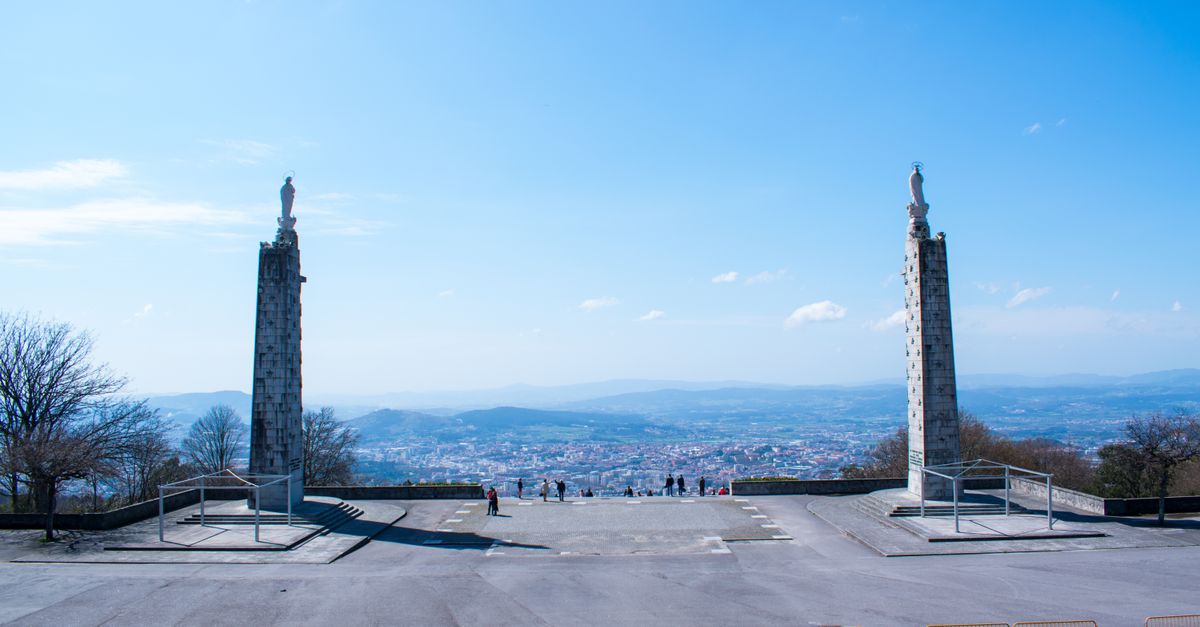
Bom Jesus do Monte is a UNESCO World Heritage sanctuary on a wooded hillside overlooking Braga. The site centers on a Baroque, zig-zagging granite staircase and a 19th-century church.
Caretos de Podence (Entrudo)
The Caretos de Podence are UNESCO-recognized masqueraders who appear in the village of Podence during Entrudo, wearing fringed costumes and brass bells. The tradition persists as an Iberian pre-Roman custom that alters the routine of this Transmontano village.

Casa da Música
Designed by Rem Koolhaas, Casa da Música is a venue for classical and experimental music in Porto. Its irregular, faceted form is a central piece of the city's modern architecture.

Clérigos Tower
The 76-meter baroque bell tower that defines Porto's skyline, by Nicolau Nasoni.

Guimarães Castle
A 10th-century stone fortification often cited as the origin point of Portuguese statehood.
We may earn a commission from bookings made through these links. It never changes what we recommend, or what we leave out.