Festas de Lisboa (Santo António)
Festas de Lisboa spans June, peaking on the eve of St. Anthony's Day. The city's historic quarters function as open-air venues for communal dining, music, and social gatherings.
A high-density event that reveals the scale of Lisbon’s neighborhood culture; prioritize this if navigating extreme crowds is acceptable, skip otherwise.

Why go
The city shifts to street-level activity in neighborhoods like Alfama, Graça, and Bica, marked by charcoal smoke from sardine grills, decorative paper lanterns, and brass bands. It provides access to the 'marchas populares,' neighborhood-based performances rooted in local competition.
Why you might skip it
Travelers who dislike extreme overcrowding, loud music until the early hours, and navigating narrow, steep streets packed with thousands of revelers should avoid the city center during the night of June 12.
What to do
Wander the cobblestone alleys of Alfama and Mouraria to witness the impromptu street parties, watch the 'Marchas Populares' parade on Avenida da Liberdade, and join the dancing in local 'arraiais.'
What to eat
Grilled sardines served on a slice of bread are the standard, paired with vinho da casa or sangria and accompanied by a 'manjerico'—a small basil plant sold with a tied-on poem.
History & origin
Dedicated to Santo António, Lisbon's patron saint known as the 'matchmaker saint,' the festival traces back centuries as a religious feast that evolved into a massive, secular civic celebration of local identity.
Getting there & around
The festivities occur throughout Lisbon's historic center, accessible by foot or the municipal metro network. Avoid driving, as street closures and extreme congestion make vehicles a hindrance during the entire month of June.
Work out how Festas de Lisboa (Santo António) connects to another stop
Common planning mistakes
Trying to navigate by taxi or rideshare on the night of the 12th is impossible due to road closures, and expecting a calm dinner at a sit-down restaurant without a reservation is futile.
Less ideal for
Travelers with mobility issues, families with young children, or those seeking a peaceful, quiet urban retreat.
Practical notes
Wear comfortable shoes for the steep climbs, bring cash for street vendors, and keep a close eye on personal belongings in dense crowds.
Where it sits


More history in Lisbon

Aqueduto das Águas Livres
The Aqueduto das Águas Livres is an 18th-century stone structure spanning the Alcântara valley. It is notable for its survival of the 1755 earthquake and its status as a primary conduit for Lisbon’s historic water supply.

Belém Tower
A 16th-century fortress on the Tagus, built to protect the harbor and serve as a ceremonial point of departure for maritime explorers.
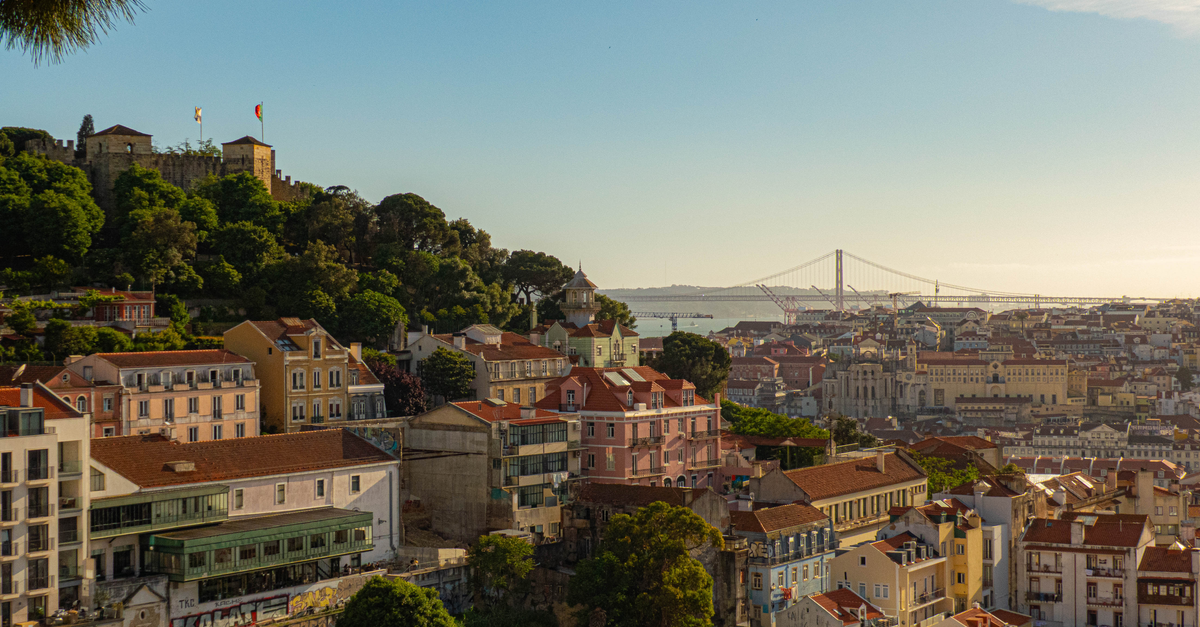
Castelo de São Jorge
Occupying the highest hill in the city, Castelo de São Jorge provides a clear vantage point across Lisbon and the Tagus River. The fortress tracks Lisbon's transition from a Moorish fortification to a royal seat.

Castelo dos Mouros
High above Sintra, the 8th-century Moorish Castle features stone fortifications on granite ridges. The site consists of rugged terrain and ruins distinct from the ornate palaces nearby.

Convento dos Capuchos
Tucked into the hills of the Serra de Sintra, the Convento dos Capuchos is a 16th-century monastery where Franciscan monks lived in asceticism. Its design, featuring cork-lined cells and stone-hewn spaces, contrasts with the opulent palaces elsewhere in Sintra.

Igreja de São Roque
Igreja de São Roque is a 16th-century Mannerist church in Bairro Alto containing an opulent Baroque interior. It is a primary example of Portuguese Jesuit architecture and art history.