Linha de Sintra
The Linha de Sintra line connects Rossio station in central Lisbon to Sintra, serving as the rail link for commuters and travelers moving between the city and the Serra de Sintra.
This is a commuter train. Carriages are crowded during peak hours. The utility lies in the direct route from downtown Lisbon to the base of the hills; sit on the right side of the carriage for views of the terrain as the train nears the final stops.

Why go
This rail line connects central Lisbon to the Sintra palaces for lower costs than a private transfer. The route shows the transition from urban density to the slopes of the Serra de Sintra, highlighting the elevation change as the train approaches the hills.
Why you might skip it
Skip the train if you are prone to motion sickness or traveling during peak rush hour, when carriages reach capacity with commuters.
What to do
Sit on the right side of the train facing forward for views as the train nears the terminal; observe the transition from urban development to the pine forests of the Sintra-Cascais Natural Park.
History & origin
Inaugurated in 1887, this line served the Portuguese royal family and the Lisbon aristocracy, who used the route to reach their summer retreats in the cooler climate of Sintra.
Getting there & around
The route departs from Rossio Railway Station, a Neo-Manueline building in the Baixa district of Lisbon.
Common planning mistakes
Assuming a taxi or rideshare is faster; during peak tourist season, the train is generally faster than the gridlock on the narrow mountain roads of Sintra.
Less ideal for
Travelers with limited mobility or significant luggage, as Sintra’s train station requires a steep uphill walk to reach the town center.
Practical notes
Use the Navegante occasional card for fares. Expect a 15-minute walk from the station to the historic center, or connect to the 434 tourist bus outside the station.
Where it sits


More journeys in Lisbon
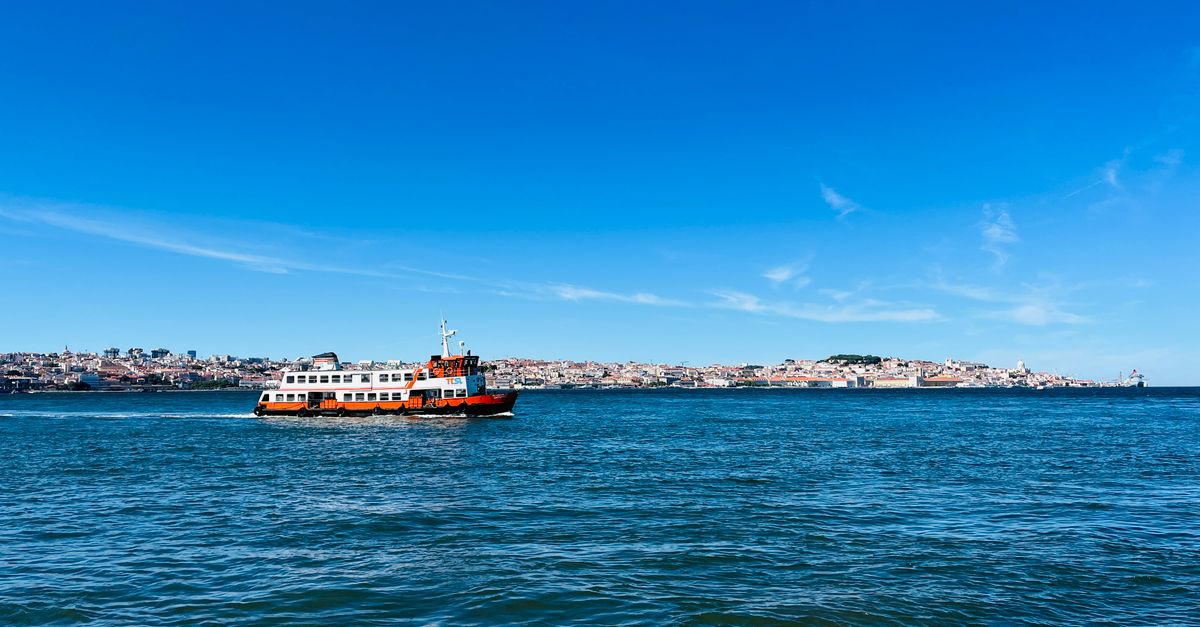
Tagus ferry (Transtejo)
The Transtejo ferry network connects central Lisbon to the Setúbal Peninsula. It serves as a daily transit route across the Tagus, providing a direct view of the city shoreline from the water.