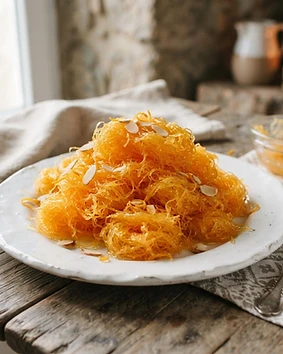
Fios de Ovos
Egg yolks spun into golden threads of sugar — the most hypnotic of the convent sweets.
A golden marvel of precision that represents the absolute peak of Portuguese convent confection. These threads are both a triumph of engineering and an excess of luxury.
It is worth seeking out to witness the mesmerizing art of straining egg yolks into boiling syrup to create delicate strands.
Where it comes from
Developed by nuns in Portuguese convents as far back as the fourteenth century, these sweets utilized the vast quantities of egg yolks left over after the whites were used to starch garments. The recipe evolved into a complex craft, requiring steady hands and immense patience to master. It remains a hallmark of regional identity that ties the country to its historical monastic past.
The dish
These are gossamer-thin, translucent yellow ribbons that dissolve instantly on the tongue with an intense, clean sweetness. The experience is airy and ephemeral, often used to garnish other desserts or served as a standalone indulgence.
Key ingredients
- 01Egg yolks
- 02Sugar
- 03Water
When to eat it
They are a staple of celebratory feasts, particularly around Christmas and Easter.
Why you might skip it
Those who find extreme sugar concentration cloying will struggle to appreciate the singular intensity of this treat.
Good to know
Acquire these from specialized pastry shops or 'doçaria conventual' boutiques in the central coastal towns.
Serve with

Bairrada
A small Atlantic-influenced region between Aveiro and Coimbra, the spiritual home of Baga — a tannic, high-acid red grape that, in good years, makes some of Portugal's longest-lived wines. Sparkling wines (espumante) made by the méthode classique are a Bairrada specialty.

Beira Interior
Portugal's highest, coldest wine region, climbing the eastern slopes of the Serra da Estrela toward the Spanish border. Frost and altitude make for nervy whites and peppery reds from autochthonous grapes few outsiders have heard of — Fonte Cal, Síria, Borba das Moscas.
Eat

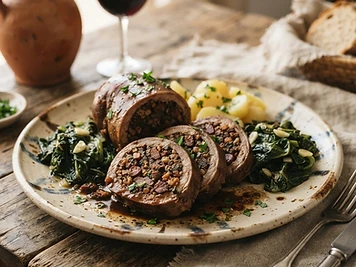
Bucho à Moda de Viseu
Stuffed pork stomach slow-braised in the Dão — a hearty, old-table dish of central Portugal.

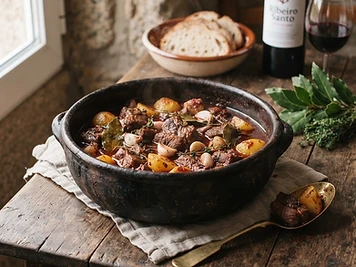
Chanfana
Goat baked in red wine and garlic — a stone-pot, slow-cooked relic of central Portugal.


Leitão Assado à Bairrada
Roast suckling pig from the Bairrada — crisp-skinned, melting, the dish that defines the Mealhada roadside.