Coimbra
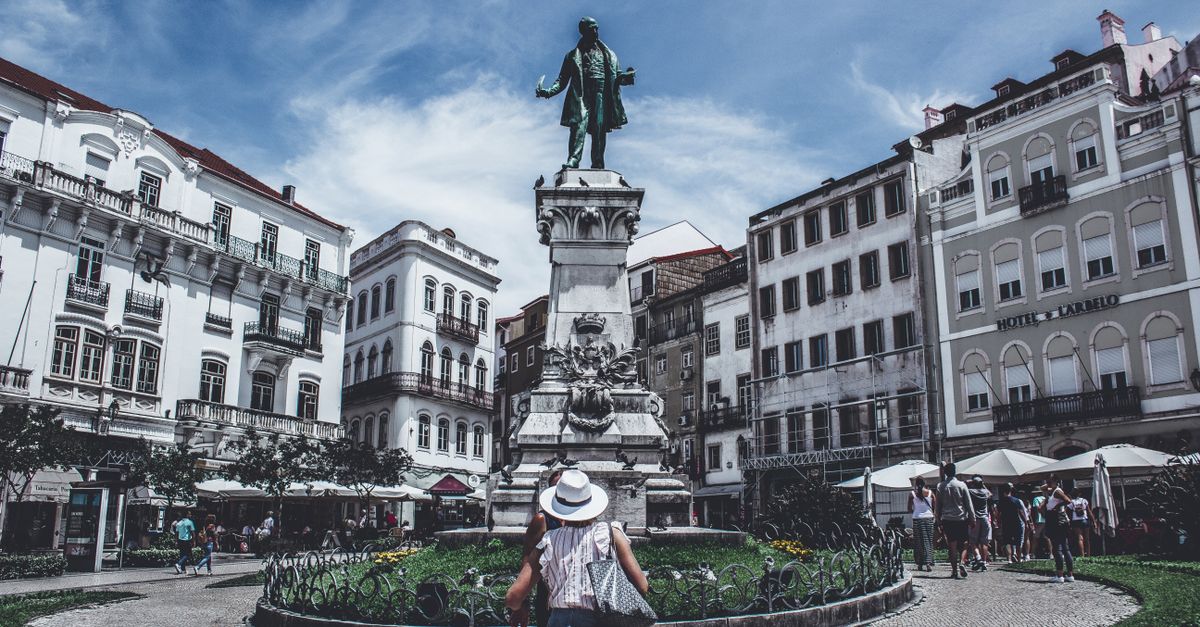
Portugal's medieval capital and university city — a steep, tiled old town above the Mondego, with a baroque library and fado of its own.
A natural overnight between Porto and Lisbon, and worth it for the university alone.
Why go
The Joanine Library, the university terrace views, the botanical garden, and a student-city atmosphere that's unlike anywhere else in Portugal.
Why you might skip it
If you're racing Lisbon to Porto, it can feel like a long stop. Hilly for limited mobility.
What to do
University and Joanine Library, Sé Velha, Portugal dos Pequenitos, an evening of Coimbra fado.
What to eat
Chanfana, pastéis de Tentúgal.
Where to stay
One night, then move on. (1 night)
Accommodations cluster between the riverfront and the base of the university hill. The riverside area offers convenient access to transit links but suffers from higher ambient noise from traffic and trains. The historic quarter provides proximity to the main sights, though lodgings here often involve narrow staircases and steep walks. Boutique guesthouses inside the old town offer more character, while modern hotel chains occupy the lower district near the river, balancing proximity to the train stations with quieter street levels.
Getting there & around
Fast train from Porto or Lisbon.
The city consists of a steep historic core overlooking the riverbank. Walking remains the primary method for navigating the medieval center, though the incline requires stamina. The central train station, Coimbra A, sits at the base of the hill near the river. Public buses serve the wider metropolitan area and the modern train station, Coimbra B. Parking within the old town is virtually nonexistent and restricted by narrow, winding cobblestone streets, making car travel inside the city center an logistical burden.
Common planning mistakes
The primary error involves attempting to drive through the narrow, vertical streets of the medieval quarter, which leads to gridlock and lack of available parking. Many itineraries treat Coimbra as a quick afternoon stopover, but the steep topography and the timed entry requirements for the Joanina Library often leave insufficient time for a comprehensive visit. Relying on Coimbra B for central access results in an additional transit requirement, as only regional trains reach the closer Coimbra A station.
Less ideal for
The city presents significant barriers for those relying on mobility aids due to the omnipresent steep grades and uneven stone pavements. Travelers seeking a quiet, flat environment for leisure find the constant elevation changes and student-heavy nightlife disruptive. The destination remains unsuited for those expecting the coastal vistas of nearby regions, as the urban landscape focuses inward on its academic history and riverbank geography rather than broad horizon views.
Practical notes
The university grounds occupy the highest point of the city, requiring a significant uphill climb from the river. Admission to the Joanina Library is strictly scheduled, necessitating advance reservations. The academic year affects the overall atmosphere, with university traditions significantly altering crowd levels and noise, particularly during the Queima das Fitas festival in May. Most museums and historic sites operate on a six-day schedule, typically closing on Mondays or specific public holidays.
What's here

Fado de Coimbra
Fado de Coimbra is a musical tradition performed by male students and alumni of the University of Coimbra, featuring themes of lost love, student life, and social protest. It is a defining element of the city's academic culture.
Entrudo de Lazarim
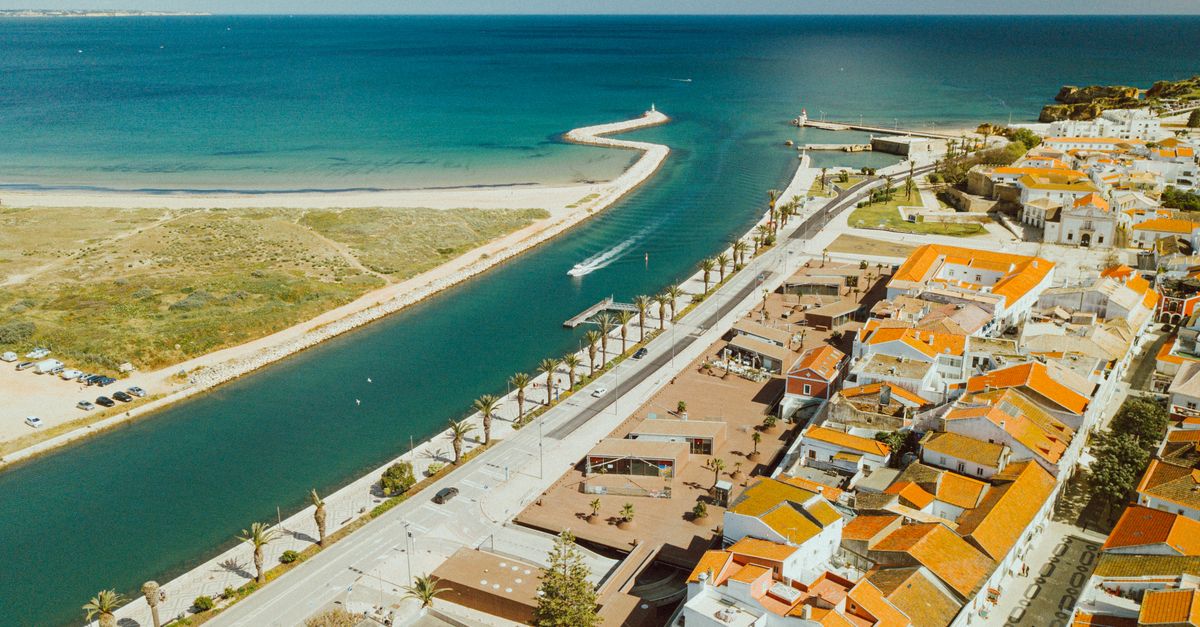
Entrudo de Lazarim is a Carnival celebration based on alder-wood devil masks and public reading of satirical poetry. It centers on the craft of local mask-makers in a rural village setting.

Carnaval de Torres Vedras
Carnaval de Torres Vedras ignores conventional stage-based parades in favor of a satirical street party. The event is characterized by the Matrafonas, men wearing improvised female costumes, and a focus on chaotic public interaction.

Peregrinação a Fátima
The Peregrinação a Fátima draws hundreds of thousands to the Sanctuary of Fátima to mark the 1917 apparitions of the Virgin Mary. It is a major gathering that defines the religious calendar of Central Portugal.

Zé Manel dos Ossos
Zé Manel dos Ossos is a cramped, long-standing tasca in Coimbra focused on traditional, home-style pork dishes. It operates as a high-turnover local institution for straightforward, cooked-to-order regional fare.

Mercado Municipal de Coimbra
The Mercado Municipal de Coimbra acts as the primary trade center for the city, providing a direct look at the produce and supply chains of Central Portugal. It serves as a resource for those observing the region's agricultural output outside of the primary commercial zones.

Grutas de Mira de Aire
Grutas de Mira de Aire is the largest visited cave system in Portugal, set within the Serra de Aire. A marked tour route descends into a limestone environment featuring stalactites and stalagmites.

Estrada da Torre (Serra da Estrela)
Estrada da Torre is a high-altitude mountain road traversing the Serra da Estrela, mainland Portugal's highest range. It provides primary access to the 1,993-meter summit of Torre, overlooking glacial valleys and granite rock formations.

Cascata da Fraga da Pena
Cascata da Fraga da Pena is a multi-tiered waterfall within the schist slopes of the Serra do Açor. It is a natural landmark of the Mata da Margaraça protected area, characterized by a dense forest canopy and shale rock formations.

Serra da Estrela Natural Park
Serra da Estrela is the largest protected area in Portugal, containing the country's highest mountain range, granite peaks, and glacial valleys. It serves as a destination for high-altitude topography, winter sports, and mountain village culture.

Torre da Serra da Estrela
Sitting at 1,993 meters, the Torre is the highest point in mainland Portugal, offering expansive, rugged vistas of the Serra da Estrela mountain range. It serves as a monumental peak marking the crown of the country’s largest protected natural area.

Vale Glaciário do Zêzere
The Vale Glaciário do Zêzere is one of the longest glacial valleys in Europe. It is the primary geological feature of the Serra da Estrela range, marked by a deep, U-shaped formation carved by ice.

Lagoa Comprida
Lagoa Comprida is the largest reservoir in the Serra da Estrela, situated at high altitude in a glacial basin. The site displays the scale of the concrete dam wall against the surrounding granite terrain.

Covão d'Ametade
Covão d'Ametade is a glacial depression in the Serra da Estrela where the Zêzere River originates. The basin features granite peaks and a dense stand of birch trees.

Santuário de Fátima
The Sanctuary of Fátima is a major Catholic pilgrimage site marking the 1917 location where three shepherd children reported apparitions of the Virgin Mary. The complex functions as a center for modern Portuguese religious practice.

Conímbriga
Conímbriga stands as one of the best-preserved Roman settlements in Portugal, offering an intimate look at the daily lives of ancient Iberians. It is most famous for its extraordinary collection of intricate floor mosaics that remain largely in their original positions.

Portugal dos Pequenitos
Portugal dos Pequenitos is a theme park in Coimbra featuring scale models of traditional Portuguese architecture and monuments. It serves as an educational record of the nation's architectural styles and regional history.

Sé Nova de Coimbra
Occupying the highest point in Coimbra, the Sé Nova de Coimbra reflects the Jesuit influence on local religious history. Its Mannerist facade and interior provide a contrast to the university district surrounding it.

Mosteiro de Santa Clara-a-Velha
This 14th-century Gothic monastery was abandoned after centuries of flooding by the Mondego River. It now operates as an archaeological site, featuring stone ruins protected by a modern glass enclosure and flood-mitigation systems.

Igreja de Santa Cruz
This 16th-century church houses the tombs of Portugal's first two kings, Afonso Henriques and Sancho I. It features a Manueline limestone facade and stone carvings by João de Ruão.
Sé Velha de Coimbra
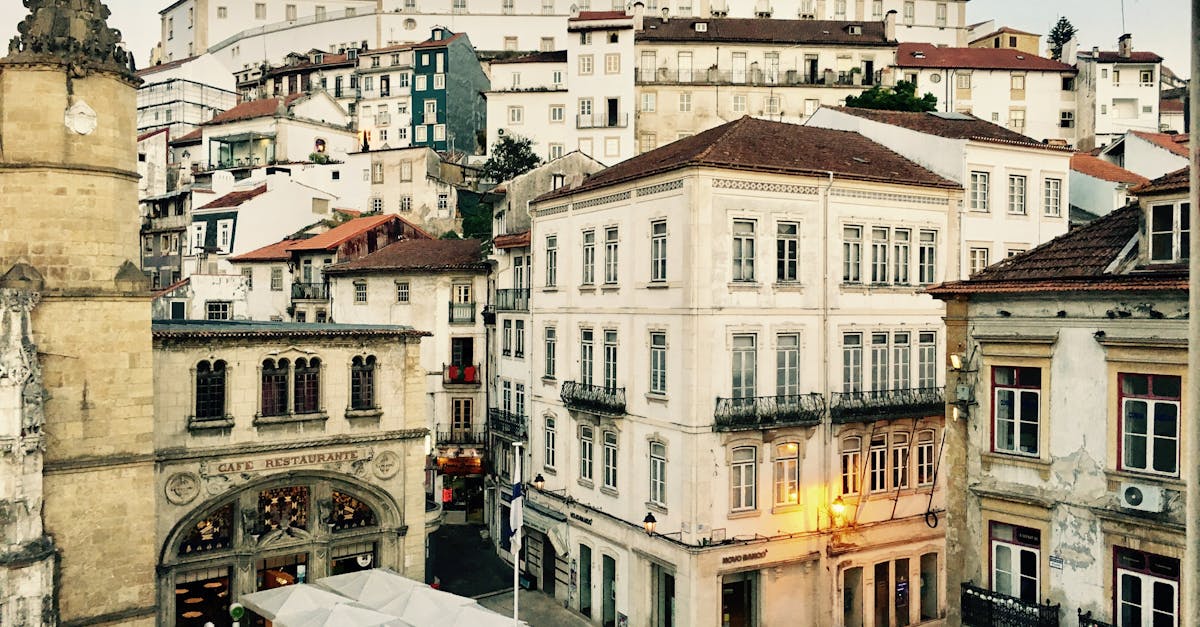
The Sé Velha is a fortress-like cathedral representing 12th-century Romanesque construction. Located at the summit of Coimbra's steep historic district, its design and cloister reflect the city's medieval period.

Bucho à Moda de Viseu
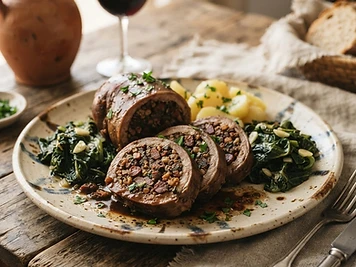
Stuffed pork stomach slow-braised in Dão wine; a regional dish of central Portugal.


Queijo Serra da Estrela
A soft, spreadable sheep's milk cheese from Central Portugal with Protected Designation of Origin status.

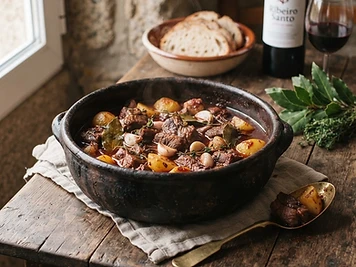
Chanfana
Goat slow-cooked in red wine and garlic within stone or clay pots, specific to central Portugal.


Fios de Ovos
Egg yolks spun into golden threads of sugar — the most hypnotic of the convent sweets.


Leitão Assado à Bairrada
Roast suckling pig from the Bairrada — crisp-skinned, melting, the dish that defines the Mealhada roadside.

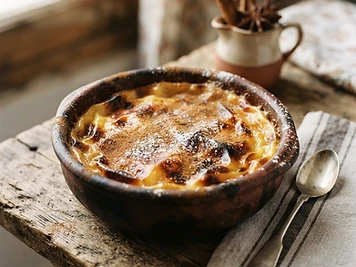
Tigelada
A rustic baked egg-and-cinnamon custard cooked in clay — a humble convent dessert of the Beiras.


Pastel de Tentúgal
A fragile convent pastry of egg-yolk cream in tissue-thin pastry — the great sweet of central Portugal's convents.

Praia da Foz do Arelho
Where the Óbidos lagoon meets the open Atlantic — calm lagoon water on one side, surf on the other, and a cliff bar above.

Praia de Costa Nova
Striped candy-striped houses front a wide Atlantic beach at the mouth of the Aveiro lagoon — Portugal's most photogenic fishing village.

Praia de São Pedro de Moel
A pine-backed beach on the central coast — quiet, family-calm, with a clifftop village and forest shade behind the sand.

University of Coimbra
Portugal's ancient university, set in a former royal palace above the Mondego.

Serra da Estrela
Mainland Portugal's highest range — granite peaks, shepherd country, the source of the country's most famous cheese, and the only real ski area.
Where it sits


More places in Central Portugal

Tomar
A Templar city on the Nabão — the Convent of Christ is one of Portugal's most extraordinary monuments.


Batalha
A small town built around one of Portugal's greatest monuments — the Batalha Monastery.

Monsanto
A granite village pinned between giant boulders — voted 'most Portuguese village' in 1938.

Nazaré
A fishing town turned big-wave legend — the Sitio clifftop, giant surf at Praia do Norte, and a working beach below.

Óbidos
A perfectly walled medieval town — whitewashed houses, yellow and blue trim, and a castle you can stay in.
We may earn a commission from bookings made through these links. It never changes what we recommend, or what we leave out.