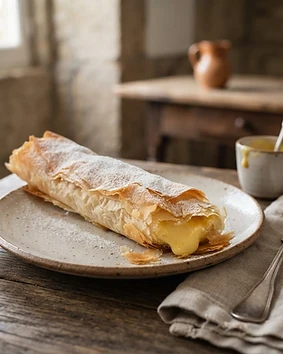
Pastel de Tentúgal
A fragile convent pastry of egg-yolk cream in tissue-thin pastry — the great sweet of central Portugal's convents.
A sublime exercise in fragility that sets the standard for convent pastry. It is the architectural equivalent of a paper crane, held together by sugar and tradition.
Savor the contrast between the impossibly delicate, shattered layers of pastry and the dense, velvety egg cream hidden inside.
Where it comes from
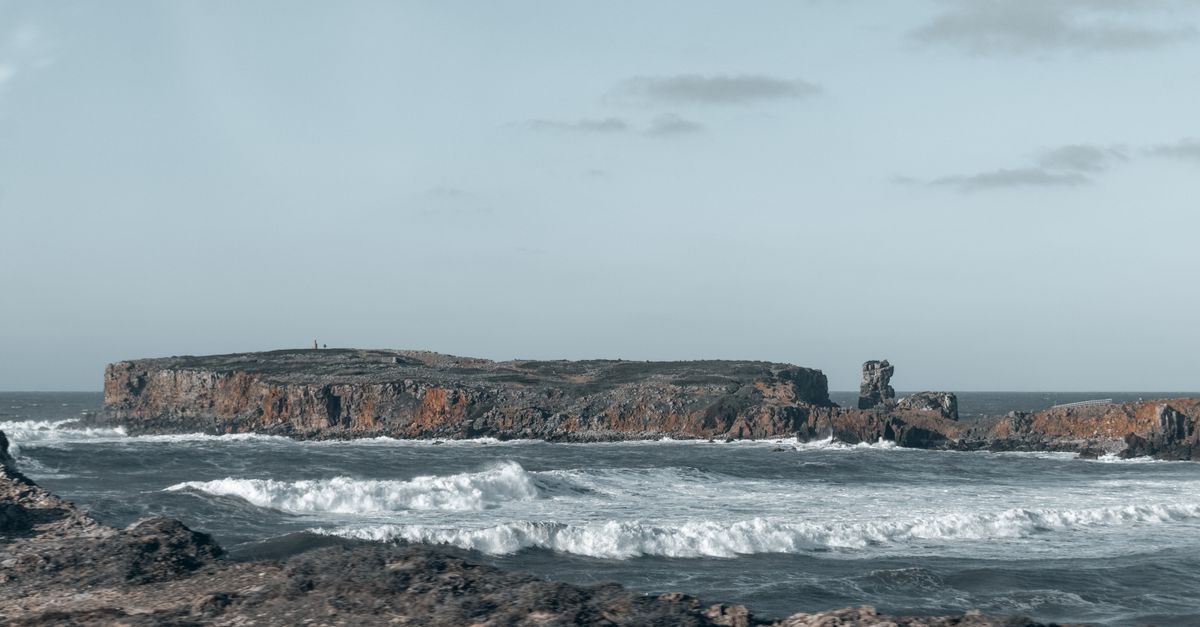
Created by the Carmelite nuns of Tentúgal, the recipe was perfected through centuries of isolation behind monastery walls. The technique of stretching the dough by hand until it is as thin as cigarette paper is a skill passed down among a dwindling number of local artisans. It has been recognized for its cultural importance, standing as a primary example of how monastic life shaped regional flavors.
The dish
The pastry is stretched so thin that it becomes translucent, then layered repeatedly before being baked to a pale, crisp finish. Upon the first bite, the exterior crackles and yields, giving way to a smooth, sweet egg-yolk curd that is rich but not heavy.
Key ingredients
- 01Wheat flour
- 02Egg yolks
- 03Sugar
- 04Water
- 05Lard
When to eat it
Best enjoyed freshly baked when the pastry retains its maximum structural integrity.
Why you might skip it
Avoid if you prefer rustic, dense, or textured desserts, as this is all about the delicacy of the dough.
Good to know
Visit the village of Tentúgal directly, where artisan bakeries continue to produce these daily in traditional workshops.
Serve with

Bairrada
A small Atlantic-influenced region between Aveiro and Coimbra, the spiritual home of Baga — a tannic, high-acid red grape that, in good years, makes some of Portugal's longest-lived wines. Sparkling wines (espumante) made by the méthode classique are a Bairrada specialty.

Beira Interior
Portugal's highest, coldest wine region, climbing the eastern slopes of the Serra da Estrela toward the Spanish border. Frost and altitude make for nervy whites and peppery reds from autochthonous grapes few outsiders have heard of — Fonte Cal, Síria, Borba das Moscas.
Eat

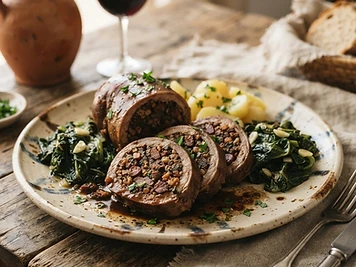
Bucho à Moda de Viseu
Stuffed pork stomach slow-braised in the Dão — a hearty, old-table dish of central Portugal.

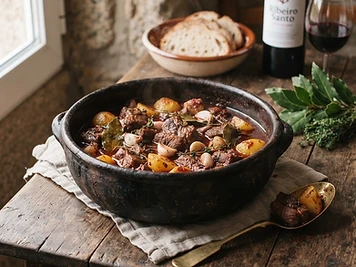
Chanfana
Goat baked in red wine and garlic — a stone-pot, slow-cooked relic of central Portugal.


Fios de Ovos
Egg yolks spun into golden threads of sugar — the most hypnotic of the convent sweets.