Monsanto
A granite village pinned between giant boulders — voted 'most Portuguese village' in 1938.
Worth the detour for the sheer strangeness of houses built under and around boulders.

Why go
The boulder-embedded houses, the castle ruins above, and the views over the Beira plains are memorable. It's touristy by Beira standards but still genuinely remarkable.
Why you might skip it
The village offers little beyond its singular visual curiosity for those seeking conventional historical sites or cultural activities. The intense physical demand of navigating the vertical boulder landscape makes the village inaccessible for individuals with limited mobility. A lack of infrastructure, such as public transport or diverse retail services, renders the location difficult to integrate into broader travel plans without a dedicated day solely for this single destination.
What to eat
Local taverns and small kitchens serve regional specialties centered on mountain tradition. Typical offerings include ensopado de borrego, a lamb stew, and various goat cheeses produced in the surrounding Beira Baixa region. Meals occur in repurposed stone dwellings where the boulder architecture serves as structural walls for the dining space. Simple, hearty fare defines the local palate, relying heavily on seasonal vegetables and rustic breads baked in wood-fired ovens found throughout the village streets.
Where to stay
A detour, rarely a night. (2–3 hours)
Overnight options consist primarily of small, family-run guesthouses converted from traditional stone houses. These accommodations offer immersion in the village environment but require navigating steep paths with luggage, as vehicles cannot reach the doors. Prices reflect the boutique nature of the historic lodging. Staying inside the village provides silence after the daily excursionists depart, though it entails limited amenities and the challenge of hauling belongings up the hillside from the designated parking zones.
Getting there & around
Access requires a car; the village is located in the Beira Baixa region roughly 25 kilometers from Castelo Branco. Follow the winding ascent of the N239 to reach the village, where you must park at the designated lots near the base of the hill and complete the remainder of the journey on foot.
The N239 provides the only access route for private vehicles, ending at designated parking lots near the base of the village. The village remains strictly pedestrianized due to narrow, granite-paved alleys that wind between massive boulders. A steep ascent characterizes the climb from the lower parking zones to the castle ruins at the summit, requiring twenty to thirty minutes of walking on uneven, steep inclines. No public bus lines connect the village to the surrounding region.
Common planning mistakes
The inclusion of Monsanto as a quick drive-through stop often results in missed explorations of the upper trails. Many itineraries fail to account for the physical toll of the steep, uneven granite streets, leading to exhaustion before reaching the castle summit. Arriving after midday during peak summer months creates significant parking congestion at the village base, as the limited capacity fills rapidly and necessitates long, exposed walks to reach the historic core.
Less ideal for
This destination is ill-suited for travelers with mobility restrictions due to the continuous steep climbing and uneven, slippery granite surfaces. It is also not ideal for those reliant on public transportation, as the village exists in total isolation from the regional rail network. The experience lacks the variety required for an extended stay, making it suboptimal for travelers seeking a base for a multi-day trip or those prioritizing modern comforts over rugged, historic isolation.
Practical notes
Cash remains the most reliable form of payment for small purchases in local shops and cafes. Most establishments maintain erratic opening hours that correlate with seasonal tourist traffic, often closing during the mid-afternoon. Mobile signal strength fluctuates due to the thick granite construction and the shielding effect of the surrounding mountains. The nearest major train station lies in Castelo Branco, necessitating a private car rental for the final twenty-five kilometer journey into the village.
What's here

Castelo de Monsanto
Built into a granite mountain, the ruins of Castelo de Monsanto overlook the plains extending toward the Spanish border. The site features the remains of defensive walls and a layout dictated by the rock formations.
Where it sits




More places in Central Portugal


Aveiro
A flat canal city on a lagoon — art-nouveau façades, moliceiro boats, and a beach (Costa Nova) a short ride away.

Batalha
A small town built around one of Portugal's greatest monuments — the Batalha Monastery.
Coimbra
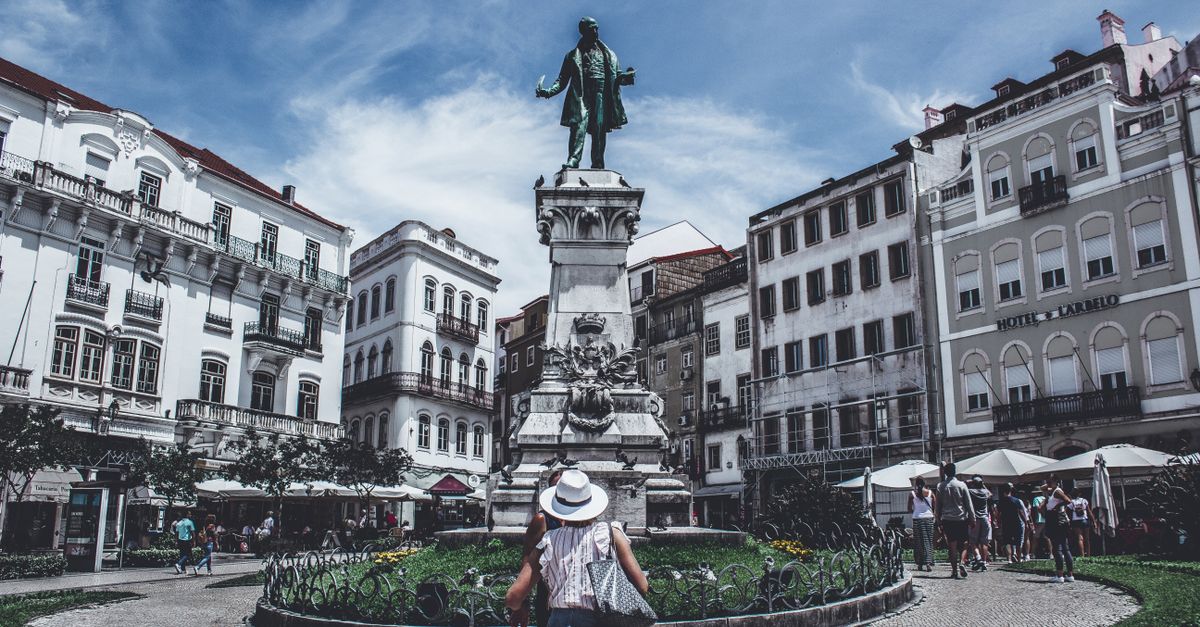
Portugal's medieval capital and university city — a steep, tiled old town above the Mondego, with a baroque library and fado of its own.

Nazaré
A fishing town turned big-wave legend — the Sitio clifftop, giant surf at Praia do Norte, and a working beach below.

Óbidos
A perfectly walled medieval town — whitewashed houses, yellow and blue trim, and a castle you can stay in.
We may earn a commission from bookings made through these links. It never changes what we recommend, or what we leave out.