Dão
Portugal's oldest demarcated wine region (1908), a cool granite plateau wrapped by mountains that keeps Dão reds elegant and its whites bright. Touriga Nacional, Alfrocheiro and Jaen define the reds; Encruzado is the white that put the region back on the map.
The thinking drinker's Portuguese red — less showy than Douro or Alentejo, more finesse. Serra-guarded and quietly excellent.
For structured, age-worthy reds and the rediscovered Encruzado whites, in a green, uncrowded upland most visitors skip.

What's in the glass
Dão wines are celebrated for their elegance, combining high aromatics with a distinct mineral backbone provided by the granite plateau. The Encruzado grape produces whites of startling complexity and texture, while the reds remain subtle and structurally refined.
How it came to be
As one of Portugal's oldest demarcated regions, the Dão has survived periods of industrial decline to reemerge as a powerhouse of elegance. The modern resurgence is largely attributed to the championing of native varieties like Encruzado and the investment in precision winemaking.
Best for, and who should skip
Connoisseurs of food-friendly, balanced wines who appreciate landscape-driven viticulture.
Less ideal for: Travelers seeking high-octane luxury resorts, massive crowds, or easy proximity to coastal nightlife. It is not designed for those who prefer the dramatic, steep-terraced verticality of the Douro or the wide, flat plains of the Alentejo, as the Dão landscape is more subtle and dispersed.
Skip if: Those expecting the massive, fruit-forward bold reds of warmer climates may find the subtlety of Dão wines understated.
Tours, tastings & getting there
The region features a mix of historic, family-run quintas and modernized estates dotting the granite landscape. Visitors should anticipate a slow pace, with many estates requiring advanced booking for private, in-depth tastings.
Getting there: 1.5–2 hr from Porto on the A25; Viseu is the natural base.
Getting around: The region is best explored by car to move freely between the diverse sub-valleys of the Dão plateau.
Many of the best estates are hidden in the hills; rely on GPS but allow for extra time. Tastings are often best enjoyed as part of a multi-day exploration of the Dão plateau.
When to go
September harvest to mid-October; May–June for green vineyards.
Year-round tasting rooms; harvest is the highlight.
Allow: 1–2 days
Beyond the tasting room
Base in Nelas or Viseu and drive the back roads between pinheiral-fringed quintas; visit Quinta dos Roques or Quinta do Ribeiro Santo, and detour to the schist villages of Lousã if time allows.
Pair with

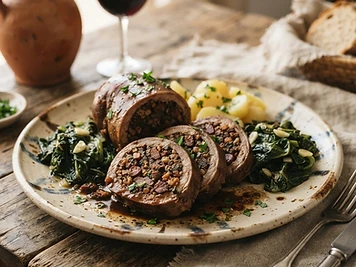
Bucho à Moda de Viseu
Stuffed pork stomach slow-braised in the Dão — a hearty, old-table dish of central Portugal.

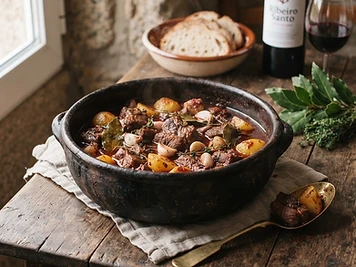
Chanfana
Goat baked in red wine and garlic — a stone-pot, slow-cooked relic of central Portugal.


Fios de Ovos
Egg yolks spun into golden threads of sugar — the most hypnotic of the convent sweets.
Other wines to explore

Bairrada
A small Atlantic-influenced region between Aveiro and Coimbra, the spiritual home of Baga — a tannic, high-acid red grape that, in good years, makes some of Portugal's longest-lived wines. Sparkling wines (espumante) made by the méthode classique are a Bairrada specialty.

Beira Interior
Portugal's highest, coldest wine region, climbing the eastern slopes of the Serra da Estrela toward the Spanish border. Frost and altitude make for nervy whites and peppery reds from autochthonous grapes few outsiders have heard of — Fonte Cal, Síria, Borba das Moscas.

Casa de Saima
A respected Bairrada producer in Cantanhede, known for balanced Baga reds and sparkling wines, with a welcoming tasting room on a working estate.
Nearby
Where it sits


