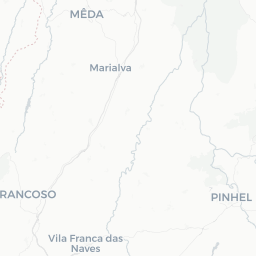
Távora-Varosa
Portugal's sparkling-wine heartland, a cool granite valley where the Távora and Varosa rivers meet, planted to Malvasia Fina, Bical and Cercial. Murganheira and Raposeira age their espumante in hand-carved granite cellars.
The most under-appreciated wine region in Portugal — if you care about sparkling, detour here.
For méthode-traditionnelle sparkling aged in granite caves, in a verdant valley no one's heard of.

What's in the glass
The cool climate and granite-rich soil combine to produce sparkling wines with electric acidity and fine, persistent bubbles. The profile is marked by lemon zest, green apple, and a distinct flinty minerality.
How it came to be
One of Portugal's smallest wine regions, Távora-Varosa has long been defined by its ability to produce world-class sparkling wine in relative isolation. The use of granite cellars is a centuries-old technique that remains the cornerstone of the region's premium identity.
Best for, and who should skip
Oenophiles looking for a cool, refreshing escape and a deep dive into the world of traditional-method sparkling wine.
Less ideal for: Visitors seeking high-end luxury resorts, extensive fine-dining infrastructure, or bustling nightlife. It is also unsuitable for those who prefer flat, easily walkable urban landscapes or those looking for a sun-and-sand experience.
Skip if: Visitors primarily searching for bold, tannic red wines will be disappointed, as the region's focus is almost entirely on sparkling and white varieties.
Tours, tastings & getting there
Visiting involves traversing a verdant, secluded valley where the focus is almost exclusively on sparkling wine. The experience is intimate, with a culture rooted in the ancient tradition of using deep granite caverns for aging.
Getting there: 1.5 hr from Porto; base in Lamego or Moimenta da Beira.
Getting around: The valley is best explored by car, with local roads connecting the primary production houses and surrounding towns.
Plan for winding roads when entering the valley. Ensure you have plenty of storage space in your vehicle for sparkling purchases.
When to go
September–October; spring for green valleys.
Cellars visitable year-round.
Allow: 1 day
Beyond the tasting room
Tour the Murganheira or Raposeira cellars near Lamego, and pair with a Douro day since Távora-Varosa sits on its western edge.
Pair with

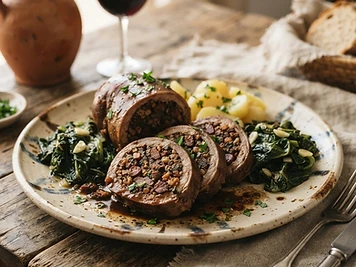
Bucho à Moda de Viseu
Stuffed pork stomach slow-braised in the Dão — a hearty, old-table dish of central Portugal.

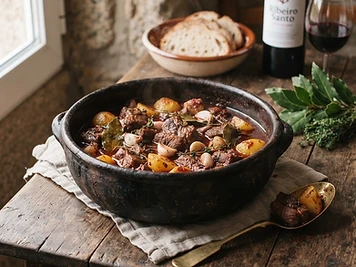
Chanfana
Goat baked in red wine and garlic — a stone-pot, slow-cooked relic of central Portugal.


Fios de Ovos
Egg yolks spun into golden threads of sugar — the most hypnotic of the convent sweets.
Other wines to explore

Bairrada
A small Atlantic-influenced region between Aveiro and Coimbra, the spiritual home of Baga — a tannic, high-acid red grape that, in good years, makes some of Portugal's longest-lived wines. Sparkling wines (espumante) made by the méthode classique are a Bairrada specialty.

Beira Interior
Portugal's highest, coldest wine region, climbing the eastern slopes of the Serra da Estrela toward the Spanish border. Frost and altitude make for nervy whites and peppery reds from autochthonous grapes few outsiders have heard of — Fonte Cal, Síria, Borba das Moscas.

Casa de Saima
A respected Bairrada producer in Cantanhede, known for balanced Baga reds and sparkling wines, with a welcoming tasting room on a working estate.
Nearby
Where it sits