Tejo
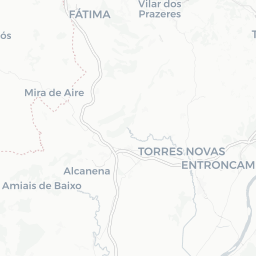
The wine region of the Ribatejo along the Tagus floodplain — historically a workhorse region now making serious, value-driven reds and crisp whites, with old-quinta estates at Almeirim and Alpiarça. Less glamorous than Alentejo, more accessible.
Underrated and easy — the logical wine stop between Lisbon and the Alentejo.
For accessible estates like Quinta da Alorna and Quinta do Casal Branco, and a flat, riverine landscape of stud farms and vineyards.

What's in the glass
Tejo wines range from easy-drinking, fruit-forward reds to crisp, aromatic whites. The modern style emphasizes value and balance, utilizing the fertile floodplain soil to produce wines with great drinkability and immediate appeal.
How it came to be
Historically the wine cellar of Lisbon due to its proximity to the capital, the Tejo has shifted from mass-market production to quality-focused estate winemaking. The region is increasingly recognized for its ability to offer high-quality wines at accessible price points.
Best for, and who should skip
Travelers looking for a relaxed, wine-focused day trip from Lisbon or a quiet base for exploring historic rural quintas.
Less ideal for: Travelers seeking the dramatic topography or high-altitude terraced vineyards of the Douro Valley will find the flat, alluvial landscape of the Tagus floodplain monotonous. It is also less suited to those prioritizing high-end luxury resort infrastructure over authentic, working-farm hospitality.
Skip if: Those seeking the dramatic elevation changes and rugged landscapes of the Douro or Dão will find the flat plains of the Tejo less visually arresting.
Tours, tastings & getting there
Visiting Tejo is an exercise in flat-land exploration, focusing on grand old estates near Almeirim. The culture is relaxed and focused on hospitality, with many quintas offering extensive grounds for touring.
Getting there: 1 hr northeast of Lisbon on the A13.
Getting around: The region is predominantly flat, making for easy and fast driving between vineyard sites.
A rental car is the most practical way to reach the rural estates. Bring a hat and sun protection as the region can be quite hot and exposed.
When to go
May–June and September.
Year-round.
Allow: 1 day
Beyond the tasting room
Visit Quinta da Alorna near Almeirim, taste at Quinta do Casal Branco, and lunch in the Sorraia plains.
Pair with

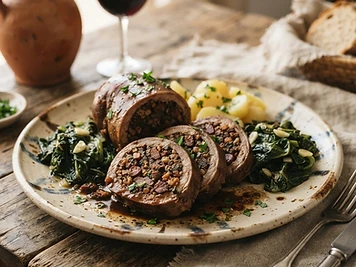
Bucho à Moda de Viseu
Stuffed pork stomach slow-braised in the Dão — a hearty, old-table dish of central Portugal.

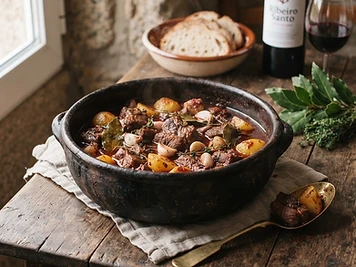
Chanfana
Goat baked in red wine and garlic — a stone-pot, slow-cooked relic of central Portugal.


Fios de Ovos
Egg yolks spun into golden threads of sugar — the most hypnotic of the convent sweets.
Other wines to explore

Bairrada
A small Atlantic-influenced region between Aveiro and Coimbra, the spiritual home of Baga — a tannic, high-acid red grape that, in good years, makes some of Portugal's longest-lived wines. Sparkling wines (espumante) made by the méthode classique are a Bairrada specialty.

Beira Interior
Portugal's highest, coldest wine region, climbing the eastern slopes of the Serra da Estrela toward the Spanish border. Frost and altitude make for nervy whites and peppery reds from autochthonous grapes few outsiders have heard of — Fonte Cal, Síria, Borba das Moscas.

Casa de Saima
A respected Bairrada producer in Cantanhede, known for balanced Baga reds and sparkling wines, with a welcoming tasting room on a working estate.
Nearby
Where it sits