Port Wine
Portugal's most famous fortified wine — grown in the Douro, aged in Gaia, and the reason most travelers first find the valley.
Essential context for any Douro or Porto trip. Taste it where it's made.
Understanding port unlocks the whole Douro: the terraces, the quintas, the lodges of Gaia. Aged tawnies and vintage ports are genuinely extraordinary wines.

What's in the glass
Port wine presents a spectrum from the vibrant, berry-laden character of Ruby and late-bottled vintage to the complex, oxidative nuttiness of aged Tawny. Each glass reflects the intense heat of the Douro Valley and the deliberate, slow maturation process in Gaia's cool, damp lodges.
How it came to be
The history of Port is inextricably linked to the 1703 Methuen Treaty, which sparked trade between England and Portugal. The Douro Valley became the world's first demarcated wine region in 1756, establishing strict standards for production and protection. The industry evolved from a commodity trade into an sophisticated pursuit of terroir and vintage expression.
Best for, and who should skip
Visitors who enjoy learning about the intersection of geography, global trade history, and rigorous traditional craftsmanship.
Less ideal for: Travelers who prioritize low-alcohol or dry, still wines exclusively, and those who struggle with the intensive, high-sugar profile of fortified wines or the steep, physically demanding terrain of the Douro vineyards.
Skip if: Travelers who strictly avoid alcohol or who prefer light, low-ABV wines may find the heat and sugar of traditional Port to be overwhelming.
Tours, tastings & getting there
The region is experienced through visits to the Douro vineyards and the historic lodges in Vila Nova de Gaia. Most estates provide guided cellar tours that explain the fortification process, the use of brandy, and the nuances of wood aging.
Getting around: The region is best navigated by riverboat and car, while the Gaia lodges are easily traversed on foot along the riverfront.
Port is best tasted in the cool of the morning, especially if traveling during the hot Douro summer months.
When to go
Year-round in Gaia; harvest in the valley Sept–Oct.
Allow: A tasting or two
Beyond the tasting room
Tour and taste at lodges in Gaia (Taylor's, Graham's, Fonseca); taste at quintas in the Douro.
Pair with

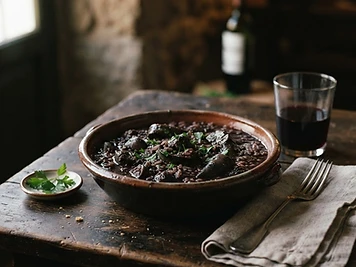
Arroz de Lampreia
A rice stew of lamprey cooked in its own blood — the Minho's most distinctive river dish, in season only.

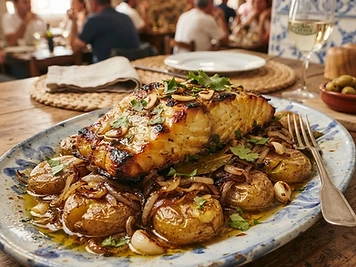
Bacalhau à Lagareiro
Salt cod roasted with olive oil and potatoes — one of the country's most beloved bacalhau preparations, born in the wine country.

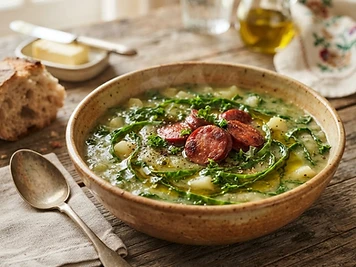
Caldo Verde
The Minho's signature kale-and-potato soup — light, green, and the country's comfort in a bowl.
Other wines to explore
Anselmo Mendes
The winemaker known as 'the father of Alvarinho,' making handcrafted Vinho Verde from his cellar in Monção — including the Contacto and Expressões cuvées that redefined what the region could do.

Aveleda
The largest Vinho Verde producer and one of the most historic — a family estate since 1870, with beautiful gardens (designed by a Swiss landscape architect) and a tasting room an hour from Porto. Casal Garcia, the world's best-selling Vinho Verde, is made here.

Casa de Mateus
The baroque palace on the label of Mateus Rosé — a real 18th-century estate outside Vila Real with manicured gardens, a historic winery and the Trás-os-Montes wine connection. The palace is the draw; the rosé's actual production is long licensed out.
Nearby

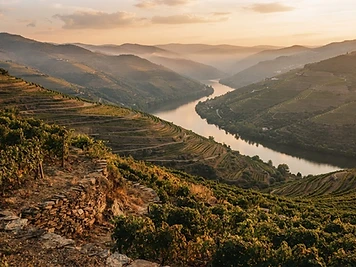
Douro Valley
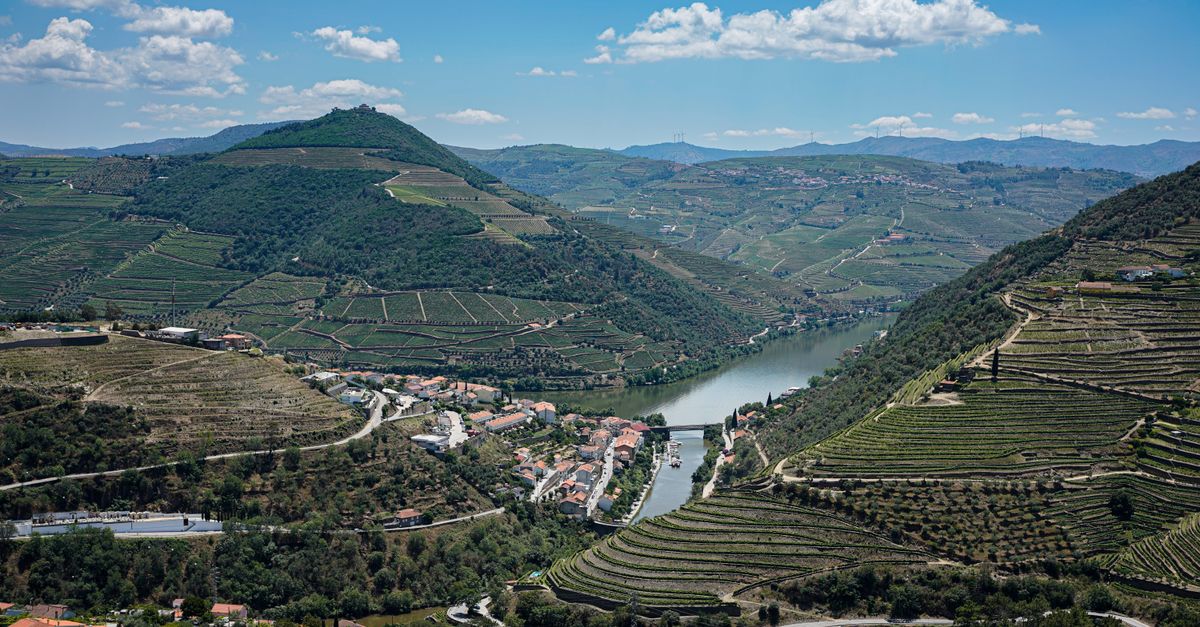
The world's oldest demarcated wine region — terraced vineyards climbing the banks of the Douro, port's birthplace, and one of the most beautiful river valleys in Europe.

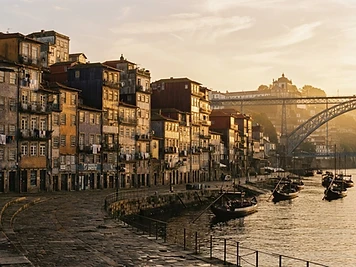
Porto
Portugal's second city — granite, port wine, the Douro waterfront and a working, lived-in heart that Lisbon has partly lost to tourism.
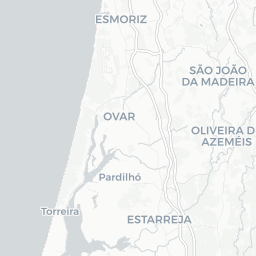
Where it sits