Carne de Porco à Alentejana
Pork and clams together — the Alentejo's most famous surf-and-turf, despite debate over its origin.
An unlikely, brilliant marriage of the pigsty and the sea that captures the contradictions of the Portuguese spirit. It is the ultimate testament to the daring of coastal-inland fusion.
It offers a sophisticated, savory interplay of land and sea flavors that remains unmatched in Portuguese gastronomy.
Where it comes from
Commonly attributed to the Algarve as a way to combine regional pork with seafood, it was adopted and perfected by the Alentejo. The dish gained traction in the mid-20th century, becoming a symbol of the rural-meets-coastal culinary dialogue. It serves as a reminder of the trade routes that once connected the agrarian interior to the bustling southern coastline. Chefs continue to debate the precise ratio of pork to clams, keeping the recipe in constant, delicious flux.
The dish
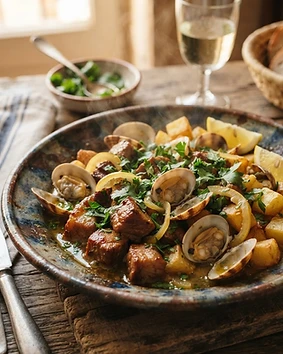
The dish features succulent cubes of pork shoulder marinated in white wine and paprika, fried until golden and then steamed with fresh, glistening clams. The clams open to release their ocean liquor into the pork’s garlicky, peppery fat. Served with fried potato cubes that soak up the brine, each bite is a layered symphony of crunch, sweetness, and salinity.
Key ingredients
- 01Pork shoulder
- 02Clams
- 03White wine
- 04Paprika
- 05Potatoes
When to eat it
Enjoy it during autumn or spring when the clams are freshest and the pork is at its peak quality.
Why you might skip it
Travelers uncomfortable with the intense, briny combination of pork and bivalves should steer clear.
Good to know
Reliable versions are found in traditional restaurants throughout Évora, often served in a clay cataplana or earthenware dish.
Serve with

Adega Mayor
A bold modern winery near Campo Maior designed by architect Souto de Moura, on the eastern Alentejo border — making a broad range of accessible reds, whites and a notable Bairrada-influenced set; one of the region's most striking buildings.

Alentejo
The great warm-climate red region of the south — Aragonez, Trincadeira and Alicante Bouschet across eight sub-regions from the granite of Portalegre to the heat of Vidigueira. Generous, approachable, and the gateway wine for most newcomers to Portugal.
Eat


Açorda Alentejana
A bread, garlic and olive oil mash with a poached egg — the Alentejo's defining humble dish.

Ensopado de Borrego
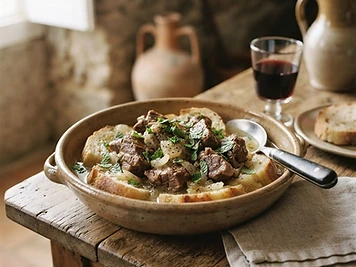
Lamb braised in bread broth — a festive Alentejo stew of the interior hills.


Migas com Carne de Porco
Bread mash with pork and its fat — the Alentejo's answer to nothing being wasted.
Where to find it
Vila Nova de Milfontes
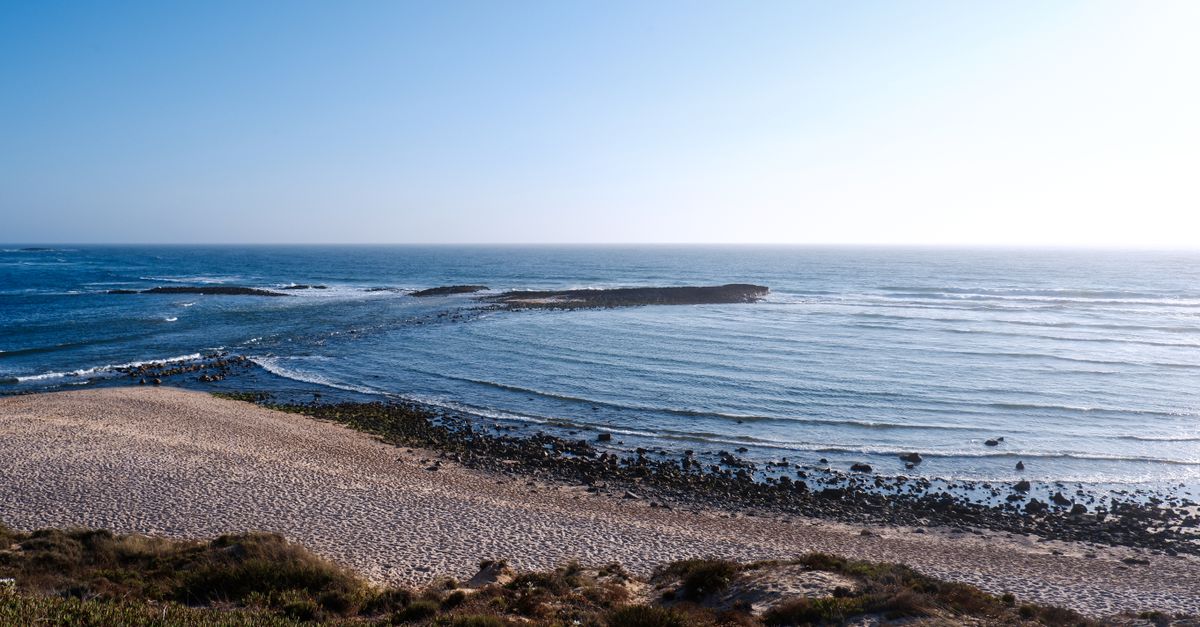
The main town of the Alentejo coast, at the mouth of the Mira river.


Évora
A walled university city in the Alentejo plain — Roman temple, bone chapel, whitewashed streets, and the regional capital of slow, serious food and wine.