Ensopado de Borrego
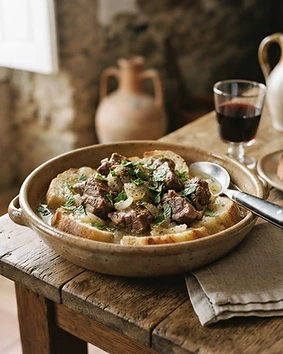
Lamb braised in a bread broth—a traditional Alentejo stew from the interior hills.
The festive hearth-side stew of the Alentejo, defined by the slow-cooked essence of the plains. It is a substantial, filling dish that pairs with a robust red wine.
It remains the standard celebratory dish of the interior hills, showcasing the depth of local lamb.
Where it comes from
Historically, this was the centerpiece of village feasts and family gatherings in the interior of the Alentejo. Because lamb was a valuable resource, the dish was developed to feed an extended family. It utilizes various cuts of meat, slow-cooked to break down fibers until tender. It remains a fixture of rural hospitality.
The dish
A braise of lamb pieces stewed in an herb-infused liquor. Slices of toasted, rustic bread are placed at the bottom of the vessel to absorb the cooking juices. The resulting broth is thick, aromatic, and carries the flavors of the shepherd’s pantry.
Key ingredients
- 01Lamb
- 02Bread
- 03Garlic
- 04Pimentão
- 05Bay leaf
When to eat it
A cold-weather dish, suited for the chillier winter months of the interior.
Why you might skip it
Those who dislike gamey flavors or heavy, bread-thickened stews will find it intense.
Good to know
Confirm availability at rural pousadas or small-town eateries that use a traditional iron pot over an open flame.
Serve with

Adega Mayor
A modern winery near Campo Maior designed by architect Souto de Moura on the eastern Alentejo border, producing a broad range of reds and whites; the building is a prominent architectural feature in the region.

Alentejo
The great warm-climate red region of the south — Aragonez, Trincadeira and Alicante Bouschet across eight sub-regions from the granite of Portalegre to the heat of Vidigueira. Generous, approachable, and the gateway wine for most newcomers to Portugal.
Eat


Açorda Alentejana
A bread, garlic and olive oil mash with a poached egg — the Alentejo's defining humble dish.

Carne de Porco à Alentejana
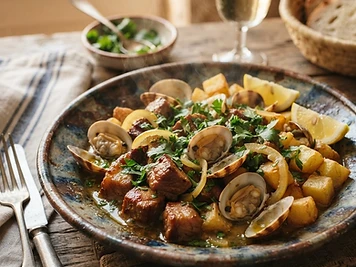
A combination of pork and clams that defines Alentejo cooking despite debate over its origins.


Migas com Carne de Porco
Bread mash with pork and its fat — the Alentejo's answer to nothing being wasted.
Where to find it

Vila Nova de Milfontes
The main town of the Alentejo coast, at the mouth of the Mira river.


Évora
A walled university city in the Alentejo plain — Roman temple, bone chapel, whitewashed streets, and the regional capital of slow, serious food and wine.
More to eat in Alentejo


Pão de Rala
A tube of egg-yolk cream wrapped in squash jam — Évora's celebrated convent sweet.

Sericaia
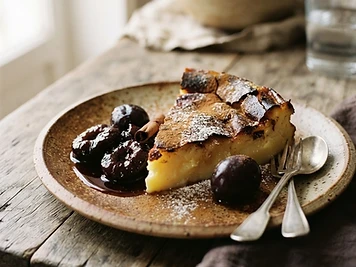
A flourless, cinnamon-spiced egg custard served with stewed plums; a staple of Alentejo convent cooking.


Sopa de Cação
Dogfish in a garlic-coriander bread soup — the Alentejo's coastal-and-interior fish stew.


Torresmos à Alentejana
Cubes of pork skin and fat fried crisp—the Alentejo's standard petisco.

Lousa da Extremadura (Estremoz)
Lousa da Extremadura is an Alentejan tasca focused on straightforward, home-style regional cooking. It functions as a local hub for those eating traditional recipes in Estremoz.

Mercado Municipal de Évora
The Mercado Municipal de Évora functions as the primary outlet for Alentejan farmers to sell produce directly to residents. It operates as a utilitarian space for acquiring regional goods away from the city's main pedestrian routes.