Migas com Carne de Porco
Bread mash with pork and its fat — the Alentejo's answer to nothing being wasted.
A textured, fatty, and utterly addictive testament to the Alentejo ethos of total utilization. It is the defining fried bread dish that anchors any serious regional meal.
It is the ultimate soul food of the plains, demonstrating how lard and stale bread can be transformed into a luxury.

Where it comes from
The dish evolved from the need to make hard, dense loaves of Alentejo bread palatable for laborers. By incorporating the fat from the seasonal slaughter of the pig, the bread became a rich, caloric foundation for the worker's diet. Over centuries, it transitioned from a survival meal into a highly prized culinary delicacy across the entire region. Each village guards its own specific ratio of lard to bread, creating distinct local variations.
The dish
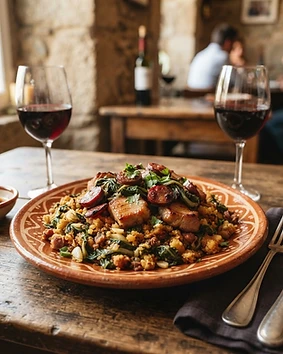
The dish begins with a mash of bread that has been soaked in the rendered fat and juices of pork, then fried until it reaches a perfect consistency of soft and crispy. It is served alongside slices of seasoned, tender pork fried in its own suet. The bite is a dense, savory explosion of rendered pork fat, garlic, and golden-brown starch.
Key ingredients
- 01Stale bread
- 02Pork lard
- 03Garlic
- 04Pork belly
- 05Olive oil
When to eat it
Best eaten after the winter months when the pork fat is fresh from the annual slaughter.
Why you might skip it
This is a heavy, oil-dense dish that is not meant for those looking for a light or heart-healthy meal.
Good to know
Seek it out in small village taverns where the pork fat is authentic and the bread is locally baked.
Serve with

Adega Mayor
A modern winery near Campo Maior designed by architect Souto de Moura on the eastern Alentejo border, producing a broad range of reds and whites; the building is a prominent architectural feature in the region.

Alentejo
The great warm-climate red region of the south — Aragonez, Trincadeira and Alicante Bouschet across eight sub-regions from the granite of Portalegre to the heat of Vidigueira. Generous, approachable, and the gateway wine for most newcomers to Portugal.
Eat


Açorda Alentejana
A bread, garlic and olive oil mash with a poached egg — the Alentejo's defining humble dish.

Carne de Porco à Alentejana
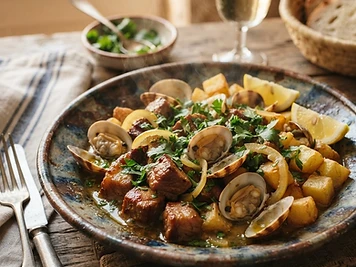
A combination of pork and clams that defines Alentejo cooking despite debate over its origins.

Ensopado de Borrego
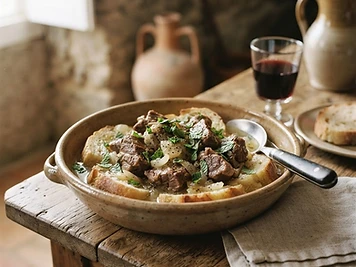
Lamb braised in a bread broth—a traditional Alentejo stew from the interior hills.
Where to find it

Vila Nova de Milfontes
The main town of the Alentejo coast, at the mouth of the Mira river.


Évora
A walled university city in the Alentejo plain — Roman temple, bone chapel, whitewashed streets, and the regional capital of slow, serious food and wine.
More to eat in Alentejo


Pão de Rala
A tube of egg-yolk cream wrapped in squash jam — Évora's celebrated convent sweet.

Sericaia
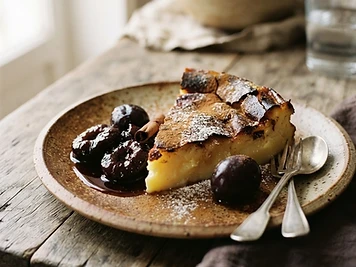
A flourless, cinnamon-spiced egg custard served with stewed plums; a staple of Alentejo convent cooking.


Sopa de Cação
Dogfish in a garlic-coriander bread soup — the Alentejo's coastal-and-interior fish stew.


Torresmos à Alentejana
Cubes of pork skin and fat fried crisp—the Alentejo's standard petisco.

Lousa da Extremadura (Estremoz)
Lousa da Extremadura is an Alentejan tasca focused on straightforward, home-style regional cooking. It functions as a local hub for those eating traditional recipes in Estremoz.

Mercado Municipal de Évora
The Mercado Municipal de Évora functions as the primary outlet for Alentejan farmers to sell produce directly to residents. It operates as a utilitarian space for acquiring regional goods away from the city's main pedestrian routes.