Torresmos à Alentejana
Cubes of pork skin and fat fried crisp — the Alentejo's most addictive petisco.
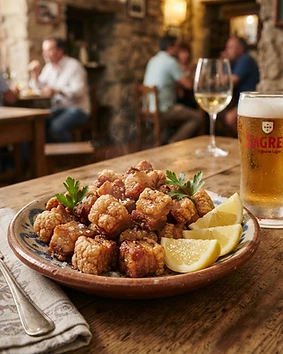
The ultimate snack of the plains, where the simple alchemy of heat and pig fat results in a crunch that echoes for days. It is the quintessential, addictive reward for a long day’s work.
It is a masterclass in texture, proving that the simplest ingredients are often the most profound.
Where it comes from
Torresmos are the natural byproduct of the annual Alentejo pig slaughter, a tradition that ensures no part of the animal is discarded. Traditionally, these would be eaten as a casual snack by farm workers or kept in large clay pots to provide a quick boost of energy. Over the decades, the recipe has remained largely unchanged, relying on the quality of the pig’s diet. It is now a beloved feature of the regional petisco culture.
The dish
Small cubes of pork belly are fried in their own rendered fat until the skin turns into a brittle, golden glass and the meat remains tender. They are typically seasoned with coarse salt and occasionally a touch of garlic or bay leaf. The first bite is an intense, satisfying crunch followed by a rich, savory melt-in-the-mouth experience.
Key ingredients
- 01Pork belly
- 02Pork lard
- 03Salt
- 04Garlic
- 05Bay leaf
When to eat it
Serve as a midday appetizer with a glass of crisp regional white wine.
Why you might skip it
It is purely fried fat and skin, meaning those avoiding high-cholesterol or heavy fried foods will be left behind.
Good to know
Find them in any authentic local tasca, usually served in small ceramic bowls alongside fresh bread.
Serve with

Adega Mayor
A bold modern winery near Campo Maior designed by architect Souto de Moura, on the eastern Alentejo border — making a broad range of accessible reds, whites and a notable Bairrada-influenced set; one of the region's most striking buildings.

Alentejo
The great warm-climate red region of the south — Aragonez, Trincadeira and Alicante Bouschet across eight sub-regions from the granite of Portalegre to the heat of Vidigueira. Generous, approachable, and the gateway wine for most newcomers to Portugal.
Eat


Açorda Alentejana
A bread, garlic and olive oil mash with a poached egg — the Alentejo's defining humble dish.

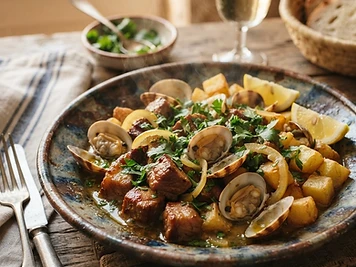
Carne de Porco à Alentejana
Pork and clams together — the Alentejo's most famous surf-and-turf, despite debate over its origin.

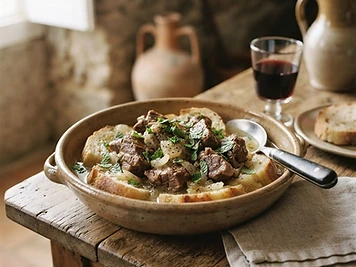
Ensopado de Borrego
Lamb braised in bread broth — a festive Alentejo stew of the interior hills.
Where to find it
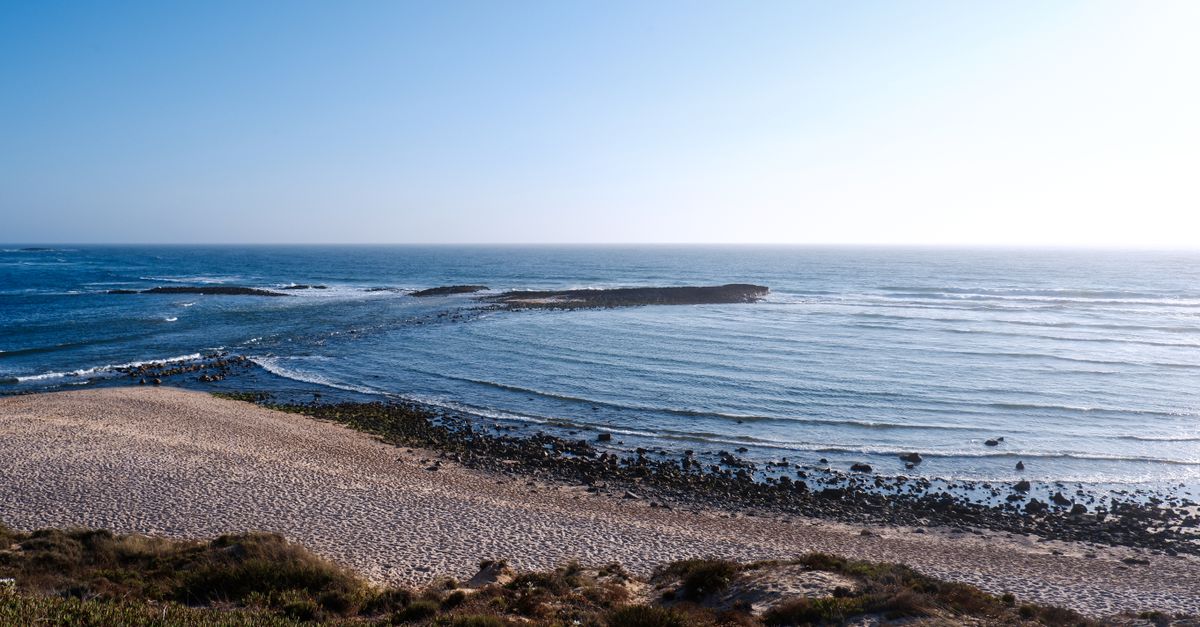
Vila Nova de Milfontes
The main town of the Alentejo coast, at the mouth of the Mira river.


Évora
A walled university city in the Alentejo plain — Roman temple, bone chapel, whitewashed streets, and the regional capital of slow, serious food and wine.