Mosteiro da Serra do Pilar
Located on a cliff in Vila Nova de Gaia, this 16th-century monastery provides a direct, elevated view of Porto and the Douro River. Its circular church and Mannerist architecture offer a contrast to the dense historic center across the water.
The primary vantage point for observing the geography of Porto and the Douro riverfront.

Why go
The monastery provides a wide-angle perspective of the Ribeira district, the Dom Luís I Bridge, and the river. Beyond the view, the site's circular floor plan—uncommon in Portuguese religious architecture—and the austere grounds provide a quiet space away from the city's concentrated tourist corridors.
Why you might skip it
Those seeking extensive interior art or detailed religious history may find the building sparse, as the focus is primarily on the exterior vista. If time is limited or the steep, uphill walk is an issue, the effort to reach this specific vantage point might outweigh the benefit compared to viewing the city from the Gaia riverfront.
What to do
Use the outdoor platform to view the city skyline, then visit the circular church and the cloister. The perimeter walls allow for views of the Douro valley from varied elevations.
History & origin
Founded in the 16th century for the Order of Saint Augustine, the monastery was a tactical site during the Liberal Wars in the 1830s, acting as a fortress for Dom Pedro IV’s forces during the Siege of Porto.
Getting there & around
Situated in Vila Nova de Gaia, the site is accessible via the walkway from the Gaia side of the Dom Luís I Bridge or by taking the Metro to the Jardim do Morro station.
The site is compact, though the approach involves steep, uneven stone paths.
Work out how Mosteiro da Serra do Pilar connects to another stop
Common planning mistakes
Many visitors take the cable car from the riverfront to the Gaia side but must still hike uphill to reach the monastery; wearing impractical shoes for the stone ascent is a frequent issue.
Less ideal for
Visitors with limited mobility or those who prefer to avoid steep inclines and stairs.
Practical notes
The site charges an entrance fee for the cloister and viewing tower; opening hours change seasonally; confirm before visiting. Photography is generally unrestricted, but be mindful of active services if the church is in use.
Where it sits





More history in Porto & North
Bom Jesus do Monte
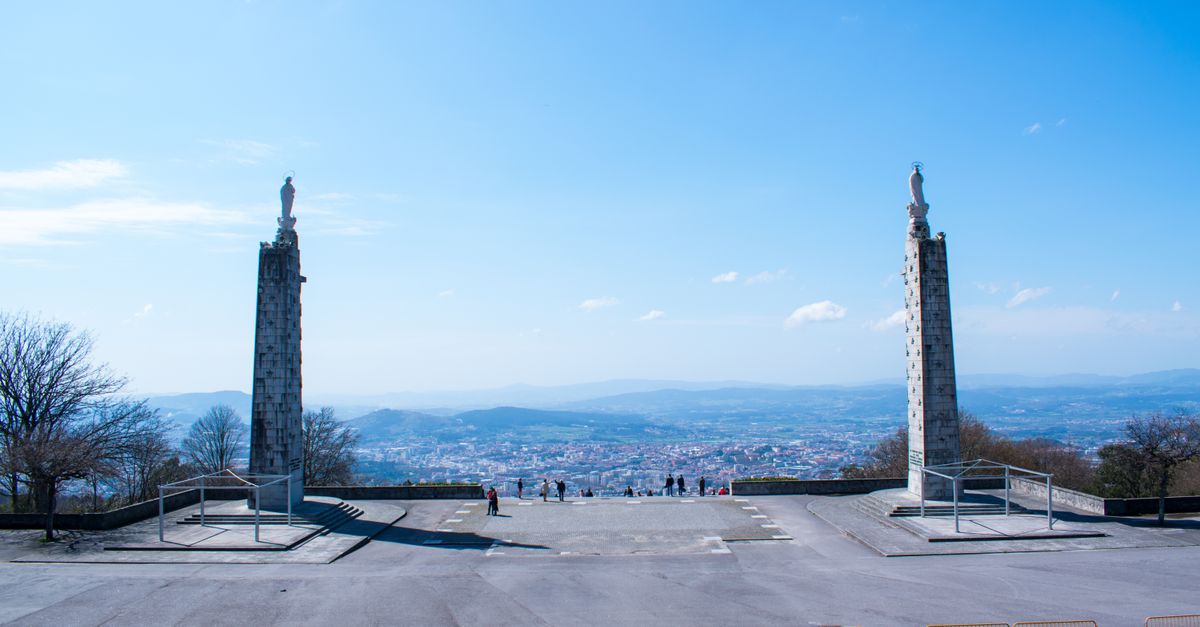
Bom Jesus do Monte is a UNESCO World Heritage sanctuary on a wooded hillside overlooking Braga. The site centers on a Baroque, zig-zagging granite staircase and a 19th-century church.

Capela das Almas
The Capela das Almas on Rua de Santa Catarina is clad in nearly 16,000 blue-and-white azulejo tiles. It documents the regional application of ceramic panels to building exteriors.
Caretos de Podence (Entrudo)
The Caretos de Podence are UNESCO-recognized masqueraders who appear in the village of Podence during Entrudo, wearing fringed costumes and brass bells. The tradition persists as an Iberian pre-Roman custom that alters the routine of this Transmontano village.

Casa da Música
Designed by Rem Koolhaas, Casa da Música is a venue for classical and experimental music in Porto. Its irregular, faceted form is a central piece of the city's modern architecture.

Clérigos Tower
The 76-meter baroque bell tower that defines Porto's skyline, by Nicolau Nasoni.

Festa de São João (Porto)
Festa de São João is a Porto street festival held on the eve of Saint John the Baptist's feast day. The city streets fill with pedestrians carrying plastic hammers and leeks, leading to a midnight fireworks display over the Douro River.
We may earn a commission from bookings made through these links. It never changes what we recommend, or what we leave out.