Estremoz
A marble town on a hill — a castle-pousada, a medieval market, and the heart of the Alentejo's marble and wine country.
The best base for the marble villages (Vila Viçosa, Borba) and a lovely town in its own right.

Why go
White marble everywhere, the castle-pousada views, the weekly market, and easy access to Vila Viçosa and Borba. Wine estates all around.
Why you might skip it
Quiet inland town; not a destination for nightlife.
What to do
The castle and pousada, the marble quarries, the market, nearby wine estates.
What to eat
Alentejo cooking; Borba wine; local marble-town pastries.
Where to stay
A detour, rarely a night. (1 night)
The Pousada da Rainha Santa Isabel occupies the former castle at the highest point of the town, offering historic atmosphere but demanding a steep hike to reach. Several guesthouses operate in the lower, more accessible parts of the town near the Rossio, providing easier luggage transport and proximity to restaurants. Prices remain lower than the coastal hubs, though luxury options are limited to the converted castle or high-end rural estates located just outside the town limits.
Getting there & around
Car from Évora.
Estremoz relies on the car for regional access. Within the town, the upper medieval section requires steep climbs on cobblestone streets. Parking is available near the Rossio, the main central square. The walk from the lower town to the castle at the summit takes fifteen minutes at a steady pace. Public bus connections exist to Évora and Lisbon, but schedules are infrequent, making a private vehicle the only efficient way to reach the nearby marble quarries and surrounding villages.
Common planning mistakes
Many travelers allocate only a few hours, failing to account for the slow pace of rural transit or the early closure of marble workshops. A frequent error involves arriving on a weekday, missing the Saturday market which serves as the primary social event in the Rossio. Others underestimate the sheer incline of the walk to the castle, leading to unnecessary exhaustion for those unprepared for the vertical layout of the town.
Less ideal for
The terrain is difficult for individuals with limited mobility due to the steepness of the ascent and the uneven cobblestones of the upper town. It is also not suitable for travelers relying on public transport or those preferring large-scale amenities, modern hotel chains, or proximity to the coast, as the inland location necessitates a minimum two-hour drive to reach the nearest beach or major international transit hub.
Practical notes
The town functions on a quiet schedule, with many shops closing in the middle of the afternoon. Saturday mornings feature the open-air market in the Rossio square, causing significant parking congestion. The climate reaches extreme temperatures during summer, while winter nights remain consistently cold due to the elevated location. Most historic marble sites require advance coordination for tours, as many are active industrial locations rather than traditional museums with standard public visiting hours.
What's here

Andanças (Redondo)
Andanças focuses on global dance and music, centering on workshops and traditional folk heritage. It functions as a participatory event where participants engage in movement rather than observing performances.

Lousa da Extremadura (Estremoz)
Lousa da Extremadura is an Alentejan tasca focused on straightforward, home-style regional cooking. It functions as a local hub for those eating traditional recipes in Estremoz.

Gruta das Torres
Gruta das Torres is a major basaltic lava tube on Pico Island, in the Azores—not in Alentejo or the municipality of Portalegre. The cave is Portugal’s longest known lava tube and can be entered only on a guided visit along a managed section of its underground passage.

Serra de São Mamede Natural Park
Serra de São Mamede is an ecological meeting point where Mediterranean, Atlantic, and Continental climates converge to create a mountain microclimate in the eastern Alentejo. It contains the highest range south of the Tagus, characterized by granite crags, chestnut forests, and deep valleys that contrast with the surrounding plains.

Parque Natural do Sudoeste Alentejano e Costa Vicentina
This protected coastline extends from Alentejo to the Algarve, characterized by schist cliffs and exposed Atlantic beaches. The terrain remains largely undeveloped, defined by consistent winds and active geological erosion.

Castelo de Estremoz
Dominating the Alentejo skyline, the 13th-century Castelo de Estremoz features a marble keep that serves as a military fortification. It remains an example of medieval defensive construction, providing views of the surrounding countryside.

Praia do Malhão
A wild, duned Atlantic stretch north of Vila Nova de Mil Fontes — the Alentejo coast at its emptiest and most elemental.
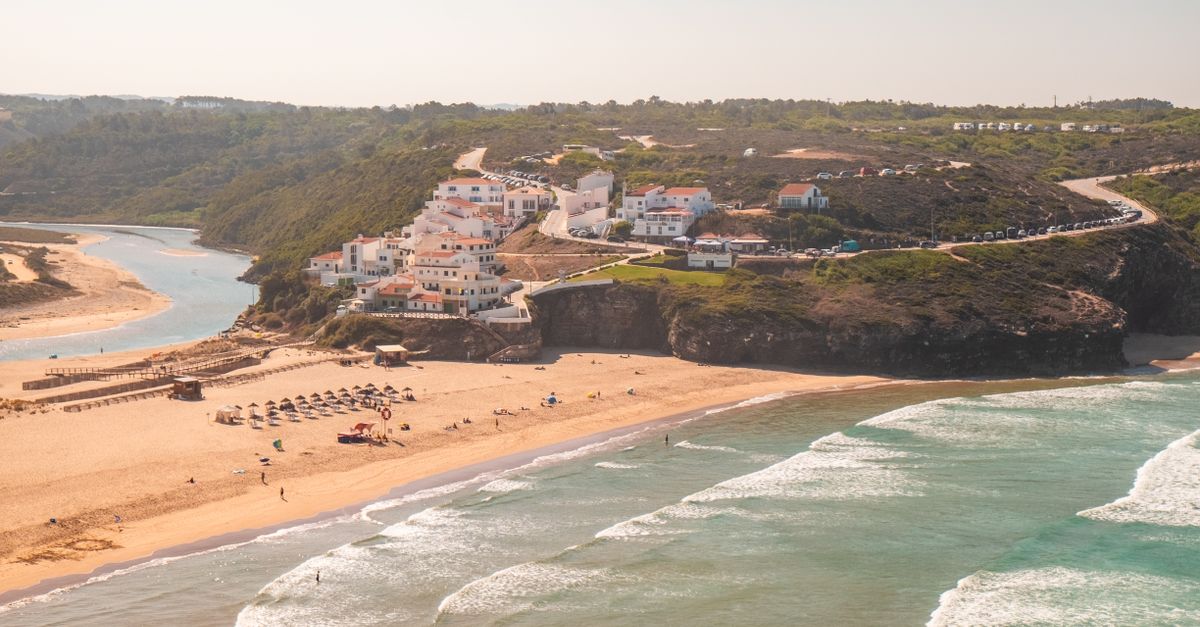
Praia do Pego
A sheltered river-mouth beach at Vila Nova de Mil Fontes, where the Mira River meets the Atlantic, suitable for families who prefer calm water over the surf of the wider Alentejo coast.
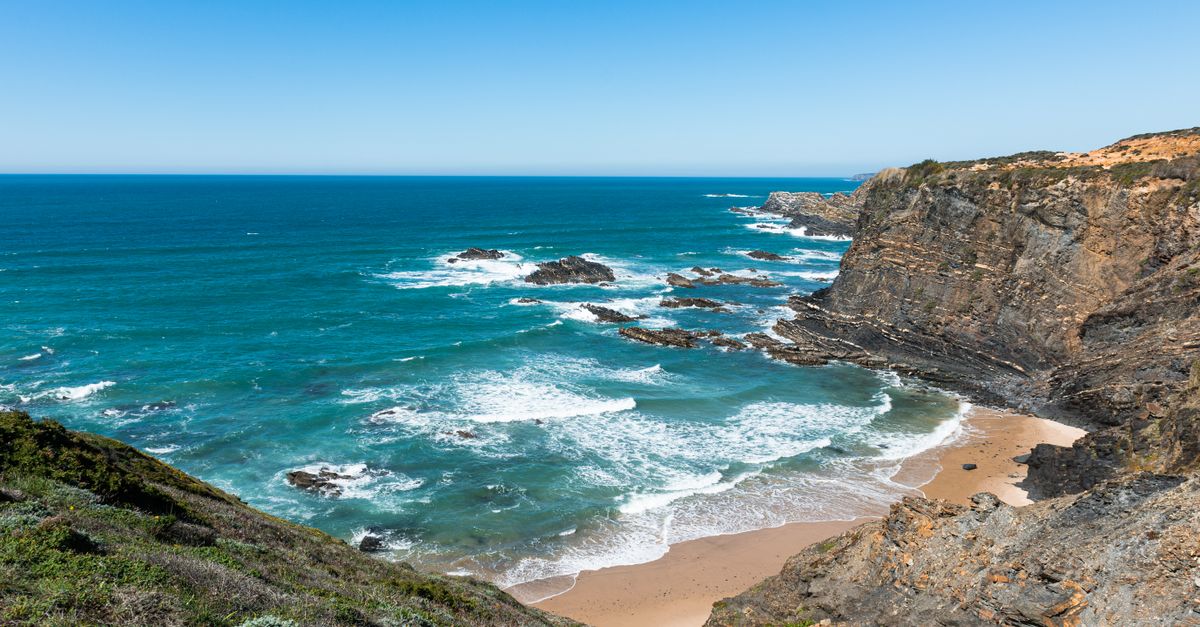
Praia do Carvalhal
The Comporta coast's signature beach — miles of pine-rimmed sand, dunes, and a laid-back restaurant on stilts.

Praia da Galé
A wild Atlantic stretch in the Southwest Alentejo park — broad, empty, and the start of the Fishermen's Trail scenery.

Rota Vicentina
Portugal's great southwest coast walk — the Fishermen's Trail along cliffs and the Historical Way through villages, from Santiago do Cacém to the Algarve.
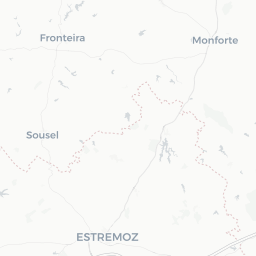
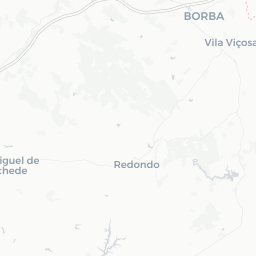
Where it sits




More places in Alentejo
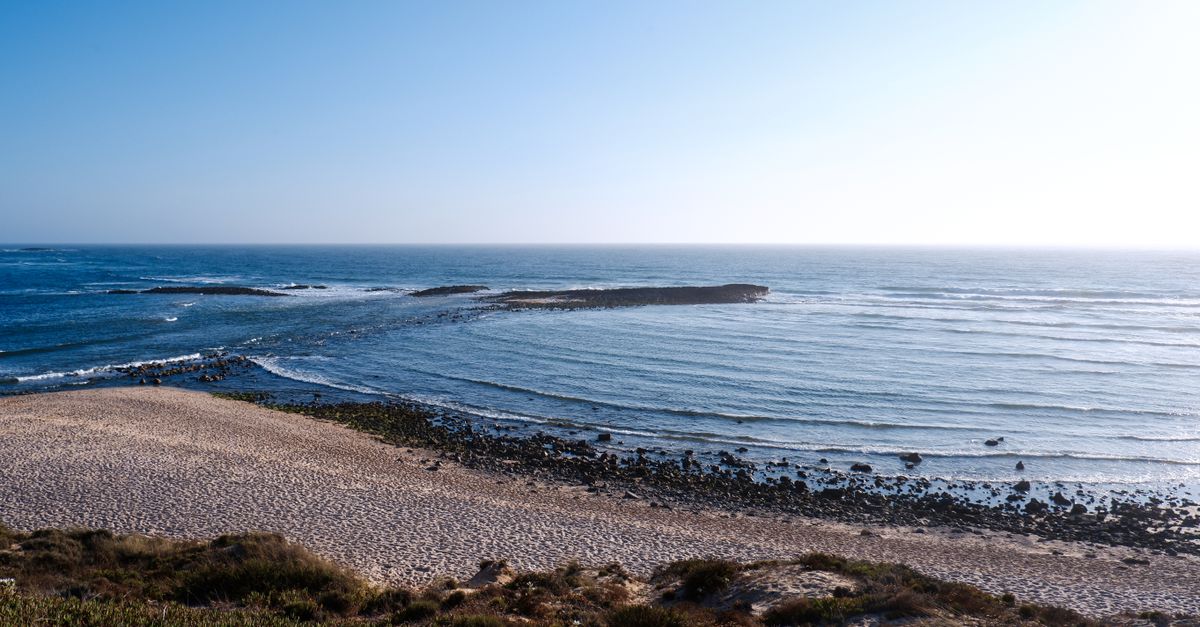
Vila Nova de Milfontes
The main town of the Alentejo coast, at the mouth of the Mira river.

Alqueva Lake
Europe's largest artificial reservoir and a designated Dark Sky Reserve—still water, hilltop settlements, and clear night skies.

Comporta
A low, sandy, pine-and-rice coast south of the Tagus — barefoot beaches, wooden cabanas, and Portugal's most quietly fashionable escape.

Marvão
An eagle's-nest walled village on a granite peak near the Spanish border — castle walls, a single gate, and views across two countries.

Mértola
A walled river-port village in the deep south-east Alentejo — Moorish past, a castle over the Guadiana, and one of Portugal's least-visited old towns.

Monsaraz
A fortified hilltop village overlooking the Alqueva reservoir; features slate-paved streets, a 14th-century castle, and views across the Alentejo plains.
We may earn a commission from bookings made through these links. It never changes what we recommend, or what we leave out.