Templo Romano de Évora
Perched in the heart of Évora’s historic center, this remarkably preserved 1st-century Roman temple stands as a testament to the region's ancient Lusitanian roots. Its iconic Corinthian columns serve as the defining visual anchor of this UNESCO World Heritage city.
An essential, quick-stop architectural marvel that anchors any visit to the Alentejo capital.

Why go
It offers a rare, tangible connection to the Roman city of Liberalitas Julia. Standing before these granite and marble ruins allows you to visualize the epicenter of ancient Roman civic life in the Alentejo, framed beautifully against the backdrop of the Évora Cathedral and the surrounding white-washed town.
Why you might skip it
Travelers expecting a massive, sprawling complex like the Forum in Rome may find it underwhelming; the site consists primarily of the elevated podium and remaining columns.
What to do
Walk the perimeter of the ruins to appreciate the scale of the Corinthian columns, then visit the adjoining garden for a panoramic view of the city and the nearby cathedral.
History & origin
Constructed in the 1st century AD, the temple was long misidentified as the Temple of Diana. It survived through the centuries by being repurposed as a fortress, a theater, and even an abattoir, which paradoxically contributed to its structural preservation until its mid-19th-century restoration.
Getting there & around
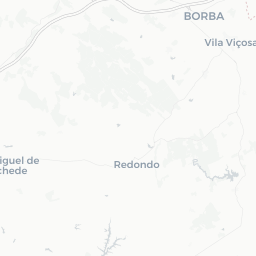
Located in Largo Conde de Vila Flor; it is centrally located and signposted from all major pedestrian paths in the old town.
The site is entirely outdoors and pedestrian-only, situated on a public square.
Common planning mistakes
Many visitors arrive during peak midday heat in July or August without water or sun protection, failing to realize the site is fully exposed with limited shade.
Less ideal for
Visitors looking for extensive indoor exhibitions or those with limited mobility who may find the surrounding uneven cobblestones challenging.
Practical notes
The site is viewable at all hours as it is in a public square, though the surrounding garden and nearby museum have specific operating hours.
Where it sits